Chennai, September 26,2026: Astronomers have confirmed the existence of a Jupiter-sized planet that is less than a million years old. Named Elias 2-24 b, it is the youngest known planet, offering scientists a rare opportunity to observe a world in the early stages of its formation.Its surprisingly rapid formation challenges leading theories about how giant planets come together, especially so far from their stars.Astronomers have confirmed the youngest known planet yet, a world less than 1 million years old that is still surrounded by the gas and dust from which it formed.According to the Science Daily website, the planet, called Elias 2-24 b, was identified using observations preserved in NASA-funded archives. It is still orbiting within its young star’s dusty disk, giving scientists a rare opportunity to study planet formation while it is still happening.”Our planet-formation models already struggled to explain the previous record holders for the youngest known planet — a four-way tie between two planets orbiting the star PDS 70 and two planets orbiting the star WISPIT 2 — which are all more than 5 million years old,” said Lucas Cieza, a professor at the Instituto de Estudios Astrofísicos in Chile and co-author of a paper detailing the results, as quoted by the website of Science Daily.”Elias 2-24 b shows us that even our best planet-formation models are still missing some important processes,” added Cieza. In a study published September 16 in The Astrophysical Journal Letters, researchers led by Andrea Bernardi, a doctoral candidate at the Universidad Diego Portales in Chile, examined archived observations of seven young stars.The stars were observed using the coronagraph at the W. M. Keck Observatory in Hawaii, which collaborates with NASA under a cooperative agreement. Surrounding each star is a debris disk containing dust, gas, and fragments of ice and rock. Gaps and other features within these disks may indicate that planets are in the process of forming.A coronagraph blocks much of a star’s bright light, making it easier to search for much fainter objects nearby. Using that technique, astronomers looked for planets hidden inside the dusty disks. Planets orbiting stars beyond our solar system are known as exoplanets.”The planets should be found within the gaps, since they are carving them,” Bernardi said. “And that’s exactly where we found Elias 2-24 b.”Elias 2-24 b is roughly as massive as Jupiter and orbits a star about 450 light-years from Earth. Because the system is so young, studying it gives astronomers a glimpse of what our own solar system may have looked like billions of years ago.Stars form inside vast clouds of gas and dust. Planets can then grow from material left over around the newborn star, gradually gathering matter and shaping paths through the surrounding disk.But observing planets during these earliest stages is extremely difficult because thick dust can hide them from view.
Most confirmed exoplanets have instead been found through transits. A transit occurs when a planet passes in front of its star and causes a small temporary drop in the starlight seen from Earth.That method becomes much harder to use when planets are still buried in dust or orbit very far from their stars.As a result, most of the roughly 6,000 confirmed exoplanets are billions of years old and orbit relatively close to their stars.Scientists currently build planet formation models using theories, computer simulations, and observations of young stars surrounded by disks where forming planets are often too difficult to detect directly. Discoveries such as Elias 2-24 b can provide crucial real-world tests for those models.”The galaxy churns out new stars and planets continuously, so there are many in every stage of evolution,” Cieza said. “That means we can see the entire process in theory, but there is a large gap in what most telescopes can detect. We are mostly blind to these baby planets right now.”A Decade-Old Mystery Comes Into FocusThe new confirmation also resolves a question astronomers have been debating for about 10 years.Earlier observations from ALMA (Atacama Large Millimeter/submillimeter Array) in Chile revealed a gap in the dusty disk surrounding the young star Elias 2-24. Later, the European Southern Observatory’s Very Large Telescope in Chile spotted a faint point of light inside that gap, according to the Science Daily website. Scientists wondered whether the object could be a planet. The problem was that existing planet formation theories suggested a large planet should not have been able to form so quickly, especially at such a great distance from its star.Current models suggest that forming a Jupiter-size planet at Jupiter’s distance from the Sun (which is just over five times larger than the distance of Earth to the Sun) takes about 5 million years. A giant planet much farther out should take even longer.Yet the faint object in the Elias 2-24 system sits about 55 times farther from its star than Earth is from the Sun and was already showing signs of being a forming planet.To investigate further, Bernardi and colleagues searched the Keck Observatory Archive, a NASA-funded collaboration between Keck Observatory and the NASA Exoplanet Science Institute at Caltech/IPAC.That analysis ultimately confirmed the object as Elias 2-24 b.”We usually hear about telescopes working separately, but this confirmation was possible only by using multiple telescopes together,” Bernardi said. “Elias 2-24 b is at the limit of what current telescopes can detect, but with new instruments like NASA’s Nancy Grace Roman Space Telescope, such detections should become easier.”They found the same faint object in observations collected in 2018 and 2020. By combining the observations and tracking how the object moved over time, the team determined that it behaved much more like a planet orbiting the star than an imaging artifact or a distant background star.
Sept 25,2026: Tata Sons has rejected Tata Trusts chairman Noel Tata’s objections to N Chandrasekaran’s reappointment as chairman, citing legal opinions from three senior lawyers to support the validity of the September 17 board resolution and the use of the chairman’s casting vote.
In a September 24 letter to Noel Tata, the holding company cited opinions from former Chief Justice of India U U Lalit, former Supreme Court judge B N Srikrishna and senior advocate Sudipto Sarkar. Tata Sons said the three opinions supported its interpretation of the company’s Articles of Association (AoA).
The dispute centres on the voting process for Chandrasekaran’s third five-year term. Chandrasekaran recused himself from the vote. Four of the five directors who voted backed his reappointment, including Tata Trusts nominee Venu Srinivasan, while Noel Tata voted against it. Harish Manwani, who presided over the meeting, subsequently exercised the casting vote.
Tata Trusts has challenged the validity of the resolution, arguing that the two Trust-nominated directors must provide the required affirmative majority and that a casting vote cannot be used when there was no equality of votes at the overall board level.
Lalit backed Tata Sons’ interpretation of the casting-vote provision. He said the split between the directors appointed under Article 104B created an occasion for the presiding chairman to exercise the casting vote under Article 121, and concluded that the September 17 resolution “was validly passed”.
Srikrishna also supported the procedure adopted by the board, saying it was “perfectly consonant with the letter and spirit of Article 121”. He said the provision should be read in a manner that allows board proceedings and the company’s business to move forward rather than remain deadlocked.
On Srinivasan’s vote in favour of Chandrasekaran, Srikrishna said the Trust nominee had “rightly acted pursuant to the statutory fiduciary duty” owed to the company.
Sarkar’s earlier opinion, obtained before the board meeting, also supported Tata Sons’ position on the casting vote. He additionally held that Article 118, which lays down a special process for selecting a new chairman, does not apply to the reappointment of an incumbent chairman.
Tata Trusts maintains its objection
Tata Trusts has maintained that the September 17 resolution was a “legal nullity”, arguing that the chairman’s appointment or reappointment requires the support of a majority of the Trust nominees. It has also cited an opinion from former CJI D. Y. Chandrachud backing its position.
The disagreement therefore hinges on competing interpretations of Articles 118 and 121 of Tata Sons’ AoA—specifically, whether the selection process applies to an incumbent seeking another term and whether a casting vote can resolve a split between the Trust nominees.
Tata Sons has now formally stood by Chandrasekaran’s reappointment, setting the stage for the next move by Tata Trusts in the dispute.
Panchkula, Sept 22,2026: Consumers will now be able to identify whether soaps, shampoos, toothpaste, cosmetics and toiletries are of vegetarian or non-vegetarian origin at a glance, with the Centre making colour-coded origin labels mandatory on their packaging.
The union Ministry of Consumer Affairs, Food and Public Distribution has notified the Legal Metrology (Packaged Commodities) Fourth Amendment Rules, 2026, which require a green dot for products of vegetarian origin and, as applicable, a red or brown dot for non-vegetarian products.
The identification mark must be displayed at the top of the principal display panel on packaged soaps, shampoos, toothpaste, and other cosmetics and toiletries. The amendment was notified by the Department of Consumer Affairs on Monday through G.S.R. 826(E) and came into force from the date of its publication in the Official Gazette. This measure establishes a clear visual disclosure requirement for personal-care products, allowing consumers to distinguish between vegetarian and non-vegetarian origins without relying solely on ingredient lists.
The government has amended Rule 6 of the Legal Metrology (Packaged Commodities) Rules, 2011, by inserting the new labelling provision. The notification also omits sub-rule (8) of Rule 6. This change is important for consumers who base their purchasing decisions on the origin of ingredients in cosmetics and personal-care products.
Manufacturers and packers must ensure that packaging for covered products includes the required colour-coded declaration on the principal display panel, as specified in the amended rules.
New Delhi, Sep 18,2026:The Election Commission of India on Friday allotted the name “Mamata All India Trinamool Congress” and the “Football Player” election symbol to the faction led by Mamata Banerjee, while assigning “Democratic Trinamool Congress” and the “Envelope” symbol to the rival group headed by Arup Roy, paving the way for candidates of both factions to contest the ongoing by-elections after the Commission froze the original “All India Trinamool Congress” name and its reserved “Flowers & Grass” symbol.
The Commission’s September 18 order was issued to safeguard the nominations of candidates fielded by the two rival factions after both sides had already submitted nomination papers claiming to represent the All India Trinamool Congress in the Rejinagar and Nandigram Assembly constituencies in West Bengal and the Nagaon Lok Sabha constituency in Assam. The two groups have been recognised as political parties in West Bengal, Meghalaya and Tripura. The fresh arrangement follows the Commission’s September 17 order barring both factions from using the name
In Rejinagar, Safiuzzaman Saikh filed his nomination as an AITC candidate with a Form-B authorised by Arup Roy, while Rabiul Alam Chowdhury filed another nomination claiming the same party’s backing with a Form-B authorised by Mamata Banerjee. In Nandigram, Ehteshmul Haque was backed by Roy, while Sanchita Pradhan (Dey) was backed by Banerjee. In Assam’s Nagaon Lok Sabha constituency, Abdul Salam filed his nomination with a Form-B authorised by Banerjee. The Returning Officers had deferred scrutiny of the nominations to September 18.
The Commission noted that, without its intervention, the Returning Officers could have been faced with two candidates claiming to have been nominated by the same political party whose name and symbol had already been frozen. Such a situation could have resulted in both nominations facing rejection and potentially deprived electors of a genuine electoral contest. Invoking its “residuary and inherent powers” under Article 324 of the Constitution and the Election Symbols Order, the Commission said the intervention was intended “to protect the democratic rights of the electors, preserve the integrity of the electoral process, and ensure that no candidate or faction is unfairly prejudiced pending a final determination of the dispute.”
Accordingly, Chowdhury’s nomination in Rejinagar will be treated as having been filed by the Mamata All India Trinamool Congress with the “Football Player” symbol, while Saikh’s nomination will be treated as having been filed by the Democratic Trinamool Congress with the “Envelope” symbol. The same arrangement will apply in Nandigram, where Pradhan’s nomination will be treated as that of a Mamata All India Trinamool Congress candidate with the “Football Player” symbol, while Haque’s nomination will be treated as that of a Democratic Trinamool Congress candidate with the “Envelope” symbol. In Nagaon, Salam’s nomination will likewise be treated as having been filed by the Mamata All India Trinamool Congress with the “Football Player” symbol.
The Commission has made it clear that its September 18 order does not amount to a final determination on the validity of the nomination papers or the competing claims over the party’s identity and organisational control. The Returning Officers have been directed to take the order into account during scrutiny and allotment of symbols while independently examining the nominations under Section 36 of the Representation of the People Act, 1951.
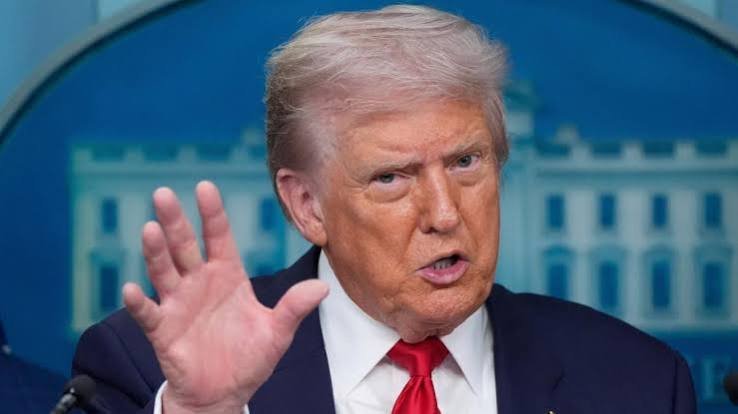
Sept 17,2026: U.S. President Donald Trump said he hoped an end to the war against Iran was near, as the conflict, in its seventh month, escalated with Saudi aircraft pounding Yemen and Houthi fighters launching drones and missiles at Saudi cities.
The Iran-backed Houthis’ lightning advance in Yemen along the Red Sea and their attacks on Saudi Arabia, along with attacks that damaged Saudi Arabia’s East-West oil pipeline, have extended Tehran’s reach in the war and heightened global oil-supply risks.
As the war expands into a new theatre, the United States tightened its travel warning for Saudi Arabia, banning government employees from travelling within 20 miles (30 km) of the Yemen border.
Still, just hours after reports of the Houthis and Saudi Arabia fighting, Trump told reporters on Wednesday evening: “Well, hopefully we are towards the end of the war.”
TRUMP SAYS IRAN WANTS A DEAL, OIL PRICE STILL ELEVATED
“They want to make a deal. We’ll see how that works out,” he said, referring to Iran, reiterating past comments. Trump also said he had heard from Iran “directly”, without elaborating.
Trump has offered shifting goals and timelines for the war that began on February 28, when the U.S. and Israel attacked Iran and Tehran struck Israel and U.S. bases in Gulf states.
The extension of the war into Yemen threatens to worsen the global energy-supply shortage caused by the war, which has disrupted shipping through the Strait of Hormuz. The strait carried about 20% of global oil and LNG before the conflict.
Traders say a prolonged closure of Saudi Arabia’s East-West pipeline could cut off as much as 4% of global oil supply.
TRUMP TO MEET GULF LEADERS, AXIOS SAYS, AS WAR SPREADS
Axios reported late on Wednesday that Trump was expected to meet Gulf leaders on the sidelines of the U.N. General Assembly on Tuesday to discuss the next steps in the conflict.
The Houthis on Wednesday released battlefield video of fighters seizing armoured vehicles from Saudi-backed forces. The video also showed warplanes flying overhead and huge explosions billowing into the sky from desert dunes.
Houthi military spokesman Yahya Saree said the group had launched fresh drone and missile strikes on the major Saudi Red Sea oil port of Yanbu and at a southern Saudi airbase at Khamis Mushait. He did not say when the strikes had taken place.
Saree said the Saudis had carried out as many as 450 air strikes on Yemen this week. Officials in the Saudi-backed government that controls southern Yemen have acknowledged that their forces and those of Saudi Arabia were conducting air strikes on Houthi positions, though Riyadh has not confirmed them.
Saudi Arabia has led a coalition battling the Houthis since 2015. The conflict had largely quietened under a ceasefire in recent years, but reignited when the Houthis declared a naval blockade against Saudi Arabia in July and fired at southern areas in the kingdom.
September 15, 2026: U.S. Air Force Secretary Troy Meink on Monday revealed that the United States has deployed space-control weapons in orbit, while also disclosing new milestones for military satellite programs tied to missile defense and long-range targeting.
But it has not disclosed what those weapons are, how many exist, which satellites carry them, their orbits, or when they were launched.US Secretary of the Air Force Troy Meink said the “on orbit” weapon was necessary to safeguard US forces against hostile enemy action.
Speaking at the Air, Space and Cyber Conference on Monday, Meink said the US was ready for “evolving threats”, but did not elaborate on the weapon’s capabilities or when it was put into orbit.
Senior military leaders have previously said they planned to boost military capabilities in space, citing Russian and Chinese programmes developing ways to attack and disrupt US satellites in a future conflict.
China responded on Tuesday by warning against an “arms race” in space.
“We urge the US side to stop expanding its military capabilities and preparing for war in outer space,” AFP quoted a foreign ministry spokesman as saying.
Details of how the weapon operates have not been disclosed by US officials.
A US Space Force spokesperson said: “Space control encapsulates the mission areas required to contest and control the space domain – employing kinetic and non-kinetic means to affect adversary capabilities through disruption, degradation and even destruction, if necessary.
“These capabilities can be employed for offensive and defensive purposes at the direction of combatant commands.”
An expert on military uses of outer space noted that “precious little” was publicly known about the technology, and told the BBC there could be a “whole range of different weapons systems”.
Speaking to Radio 4’s Today programme, Dr Bleddyn Bowen, from the Royal United Services Institute (RUSI), said he was “totally guessing” but that the US could have been referring to “some kind electronic warfare or radio jamming platform”.
That would be the sort of weapon that already exists on Earth and could disrupt radio communications, Bowen said.
An alternative would be “a kinetic kill vehicle of some sort – so a vehicle that would release a projectile of some sort that would ram into a satellite and destroy it”.
But this was less likely because such a physically destructive tool would be capable of creating a lot of debris, Bowen added.
The Trump administration has said that space-based capabilities – and interceptor missiles – are a crucial part of its planned “Golden Dome” defence system to protect the US from missiles and other airborne threats.
Last year President Donald Trump issued an executive order underlining the US Space Force’s role in not only defending assets, but also as an attacking force.
The US Space Force – the first new branch of the US military for more than 70 years – was launched in 2019 as a way to protect American assets in space, including hundreds of satellites used for communication and surveillance.
A 1967 treaty banned weapons of mass destruction in orbit. Since then, key powers including the US, Russia, and China have been exploring other capabilities outside of the treaty, such as targeting rivals’ satellites – which are key for military communications, surveillance and navigation.
In early February, it was revealed that two Russian satellites had likely intercepted the communications of at least a dozen European ones since Russia’s invasion of Ukraine in 2022.
Such interceptions may have allowed Russian intelligence services to read the sensitive data they transmit, or hypothetically, even to take control of the satellites.
In 2024, the US said Russia had launched a satellite which it believed may be capable of attacking other such probes. Russia did not publicly comment on the issue.
The US Space Force says China “develops and operates space and counterspace capabilities as part of a military modernisation strategy,” while Russia “views space as a warfighting domain and believes space supremacy will be a decisive factor in future conflicts”.
CAIRO/WASHINGTON/DUBAI, Sept 10,2026: Iran-aligned Houthis seized control of c on Thursday, military sources said, posing a further threat to global energy supplies.
Four Yemeni government military sources said the Houthis had gained further leverage over the Bab el-Mandeb Strait, the southern outlet of the Red Sea and one of the world’s most important shipping routes, and were launching attacks on the strategic islands of Hanish.
Later, two Yemeni government sources reported the Houthis had reached the islands.
If the Houthis impose a stranglehold over the waterway, on the opposite side of the Arabian peninsula from the Strait of Hormuz, it could give their sponsor Iran a critical advantage in the war with the United States, reducing supplies through a second major transit corridor and sending oil prices surging.
Brent crude prices rose 3.5% to above $100 a barrel on Thursday on concern over disruption to supply routes.
The Houthis entered the current war alongside Iran with an attack on Israel on March 28, but largely stayed quiet before declaring a naval blockade against Saudi Arabia in July and stepping up attacks on the south of the kingdom in September.
Saudi Arabia, the world’s largest oil exporter, has relied on the Red Sea shipping route since the Iran conflict effectively closed the Strait of Hormuz, through which a fifth of global oil used to flow.
Tensions in the region were high on Thursday, with Saudi civil defence authorities issuing emergency alerts in the southwestern city of Khamis Mushait for the fourth time in 24 hours, as the Houthis attacked.
Pakistan has delivered a Saudi warning to Iran to rein in its Yemeni Houthi allies in an effort to prevent the crisis from spiralling, Saudi, Pakistani and Iranian sources said.
A senior Iranian official confirmed that Pakistan conveyed the message to Tehran on Tuesday and its response was that “Iran does not control the Houthis”.
The conflict in Yemen between Saudi Arabia’s Yemeni allies in the internationally backed government and the Houthis, comes as Iran and the United States staged their biggest declared wave of tit-for-tat attacks on shipping in the Gulf region this week since the war began in February.
AXIS OF RESISTANCE
Seen as part of a regional alliance known as the “Axis of Resistance” backed by Iran, the Houthis have also rallied behind the Palestinians in the Gaza war, lobbing drones and missiles at Israel and attacking commercial shipping in the Red Sea.
Kathmandu, Sep 10,2026: The Nepal government estimates that over NPR723.31 billion ($4.74 billion) will be needed to recover from the damages suffered in the wake of the devastating floods in the Bhotekoshi River area of Rasuwa on August 26. The figure comes from a Rapid Damage and Needs Assessment prepared by a joint technical team from the National Planning Commission and the National Disaster Risk Reduction and Management Authority. Of the total, NPR473.57 billion ($3.10 billion) is expected to be required to restore infrastructure, which accounts for about 75% of overall recovery needs.
Bengaluru (Karnataka), September 9,2026: Group Captain and astronaut Angad Pratap on Wednesday said Gaganyaan will lay the foundation for India’s larger human spaceflight ambitions, including the Bharatiya Antariksha Station, stressing that the country’s ultimate aim should be to make space accessible to everyone and push the boundaries of knowledge for humanity.Speaking at the Space Expo session ‘The Next Chapter of Space: A Conversation on Exploration, Science and Innovation’, Pratap said Gaganyaan is about developing India’s independent capability to send humans into space and described it as a major technological milestone.“Gaganyaan is about acquiring the capability to launch a human to space domestically, here in India. It’s a huge capability, and I am very, very eagerly waiting for that day to happen. Because it is a very critical piece of what I would call apex technology, which has 16 to 20 very niche sets of technologies under it. So once you reach that milestone, it is a huge milestone for any country in the world, and we are going to be the fourth country in the world to do that, all by ourselves,” he said.
However, he said India’s human spaceflight ambitions should not be limited to Gaganyaan, pointing to the Bharatiya Antariksha Station as an important part of the country’s long-term plans.“Notwithstanding that, I wouldn’t really restrict myself to Gaganyaan, because in India people currently associate human spaceflight only with Gaganyaan. The Bharatiya Antariksha Station is still in the shadows. So Gaganyaan is nothing but human spaceflight,” Pratap said.He said human spaceflight would allow scientists to expand knowledge beyond what can be learnt by observing phenomena on Earth.“And for those from a physics background, you know about the physics cube. All of the learning we have had, whether in the biological domain or the engineering domain, we have learned primarily by observing things here on Earth. There is much, much more to learn out there, beyond Earth, for which you have to send your scientists. You have to send humans of all specialisations — who are probably sitting right here — all the way up there,” he added.Pratap said Gaganyaan should therefore be viewed as a foundation for much larger human spaceflight programmes. “So Gaganyaan may sound like just one single capability or a technology demonstrator where we just send one person, for one orbit maybe, and bring them back. But that will lay the foundation for much bigger things that I have already talked about, and Tom has already talked about,” he said.He also stressed the need for greater collaboration between the government and private sectors in India’s space programme.“We need to make space accessible to everyone. A lot of technology will cross over between the private sector and the government sector — it’s a symbiotic relationship, and both will gain from each other. But the ultimate aim is to push the boundaries of knowledge for humanity as a whole,” he added.
The session featured Sunita Williams, retired US Navy officer and NASA astronaut and Tom Shelley, Vice President, Crew Partnerships, VAST Space, who discussed the future of space exploration, science, innovation and commercial space stations.NASA astronaut Sunita Williams said India is “ready for the challenge” of building future space stations, while stressing that advanced technologies, autonomous systems and international cooperation will be critical as human spaceflight moves beyond the International Space Station (ISS).Williams said the next generation of space stations offers an opportunity to develop systems that can reduce dependence on Earth, including onboard databases, reliable 3D printing and autonomous scientific analysis. Reflecting on her experience aboard the ISS, Williams said astronauts cannot simply rely on a database or search engine in space in the same way people on Earth can.
Moscow, Sept 8,2026: Artificial intelligence poses an existential threat to humanity, which must be addressed promptly, UN High Commissioner for Human Rights Volker Turk said. “I share the concerns of industry insiders that advanced AI could pose an existential risk to humanity … I am calling here, today, for an all-out effort to put cast iron guarantees in place around the safety and security of AI, before it is too late,” he said at the 63rd session of the Human Rights Council, as quoted by his office on Monday.
Turk added that he would send a corresponding letter to all leading AI development companies in the coming days. At the same time, he said that only a handful of people hold “almost unlimited power over AI.”
“At a minimum, we need countries hosting AI and those involved in its supply chains to come together around agreed red lines,” Turk said. In December 2025, Chief Economist for the Asia-Pacific Regional Bureau of the United Nations Development Programme (UNDP), Philip Schellekens warned that the military application of AI could pose an existential threat to humanity and lead to mass casualties, stressing the need for highly responsible regulation.
HORROR’ AT AUTONOMOUS DRONES
“I share the concerns of industry insiders that advanced AI could pose an existential risk to humanity,” Turk told the body in Geneva.
“I am calling here, today, for an all-out effort to put cast-iron guarantees in place around the safety and security of AI, before it is too late.”
Turk did not elaborate on the nature of the risks but a spokesperson for his office said failures involving powerful AI systems could disrupt critical infrastructure and democratic institutions.
She referred to the “dangerous agent-training behaviours” in July’s so-called Hugging Face incident where a swarm of OpenAI agents hacked an open-source platform, saying it suggested that frontier AI capabilities are advancing faster than the safeguards.
Turk warned that just a handful of men held “almost unlimited power over AI” without naming any. Top AI companies include Meta, Anthropic, OpenAI and Google(GOOGL.O).
“At a minimum, we need countries hosting AI and those involved in its supply chains to come together around agreed red lines,” he said.
In January 2025, UN Secretary-General Antonio Guterres called uncontrolled AI an existential threat, alongside climate change and nuclear weapons.
DUBAI, Sept 7,2026: Iran said it will announce a new restricted zone in the Gulf in the coming days, along with maps of a new shipping corridor through the Strait of Hormuz.
The new restricted zone will begin from where the U.S. blockade of Iran begins and extend into areas of the Gulf, Mohsen Rezaei, the secretary of Iran’s Supreme National Security Council, said on Sunday in an interview with state TV.
Few details were provided on the plan, but Rezaei said any ship entering the new zone would be added to a sanctions list.
In addition, maps detailing passage routes for the Strait of Hormuz, a vital energy conduit largely closed to tanker traffic, would also be approved soon, Rezaei said.
“The maps of a new international corridor which lies in Iranian and Omani waters and in which Iran will have management have been agreed and should be signed in the coming days,” he said.
“We will only commit to the Strait of Hormuz being open when they (the Americans) stop the sabotage, threats and attacks on Iran,” Rezaei added.
Six months after U.S.-Israeli strikes on Iran sparked the war, the conflict appears to be at a stalemate. A preliminary ceasefire accord reached in June has unravelled, and little progress has been made in diplomatic efforts to get the peace process back on track.
After a pause in military action for much of August, tit-for-tat strikes have resumed. U.S. forces struck three Iranian oil tankers on Saturday, U.S. Central Command said, including one off Kharg Island, Iran’s key oil export hub, following attacks by Iran’s Islamic Revolutionary Guard Corps on U.S. warships in the region.
Tehran has shown it retains the capability to attack U.S. interests in neighbouring countries and to shut down oil flows through the Strait of Hormuz, through which about a fifth of global oil supplies flowed prior to the conflict.
An average of 10 commodity ships transited the Strait per day in the past 10 days, the lowest since May, according to shipping data on Monday. That helped oil prices extend last week’s big gains, with Brent crude up 0.8% above $97 a barrel.
SANCTIONS, OIL BLOCKADE SQUEEZE ECONOMY
Iran has said it will step up efforts to tackle problems created by U.S. sanctions that are crippling its economy.
However, the U.S. campaign to throttle Iran’s economy by blockading its oil exports and stopping sanctions evasion is growing increasingly difficult to withstand, three senior Iranian sources have said.
Iran’s Parliament Speaker Mohammad Baqer Qalibaf said on Sunday that the U.S. should understand that the rules of the game have changed “before it is too late”.
“From now on, any attack against Iran’s interests and security will receive a faster, heavier and more painful response,” he said in a speech published on his Telegram channel.
Qalibaf said that alongside the military front, Iran’s main battle was now over production and people’s livelihoods.
He cited sharp currency fluctuations, inflation, unemployment and market management as major challenges, adding Iranians could tolerate hardship but not mismanagement or inaction and expected the government to act quickly.
Iran’s Economy Minister Ali Madanizadeh said Tehran planned to respond to U.S. economic pressure with reforms and rejected the notion that sanctions would cause it to change course, according to state media on Sunday.
“They speak of economic pressure and isolation, of breaking off financial ties and they think that by pressuring the economy of a country they can change the decisions of its people,” Madanizadeh said.
“I have to clarify one point: The responsibility of reforming Iran’s economy is with its government and people, not with the U.S. Treasury.”
KHARG ISLAND HIT 550 TIMES IN PRIOR MONTHS, IRAN SAYS
Iran is the third-largest producer in the Organization of the Petroleum Exporting Countries and exported 90% of its crude via its Kharg Island export hub before the war. Flows have been disrupted since a U.S. blockade of Iranian oil exports began in mid-April.
U.S. Central Command said on X that as of Sunday it had redirected 92 commercial vessels, disabled three and boarded two to ensure strict compliance with its blockade.
On August 31, U.S. President Donald Trump issued a one-line social media post accompanied by an AI-generated video depicting Kharg Island being “blown to smithereens.” Iranian authorities have vowed a strong response if Kharg is attacked.
In an interview aired on state TV on Sunday, Iran’s Oil Minister Mohsen Paknejad said the island had been hit around 550 times in previous months but continued to operate.
Iran’s blockade of the Strait of Hormuz has pushed up fuel prices, weighing on Trump’s popularity as his Republican Party heads into elections in November when control of Congress is at stake.
However, U.S. Energy Secretary Chris Wright said oil was getting through the waterway.
“Our transits through the Strait are averaging over 9 million barrels a day now, and with the access pipelines that go around the strait, we’re probably two-thirds or more of pre-conflict flows. So Iranians are still causing trouble, but the United States Navy is winning that battle,” he told CNN.
New Delhi, Sep 4,2026: The National Commission for Protection of Child Rights (NCPCR) has rescued more than 3,800 children as part of its nationwide “Pan-India Rescue and Rehabilitation” campaign aimed at protecting children from child labour, trafficking and exploitation. The campaign, launched on June 12 and continued until August 31, brought together State Governments and union Territory administrations, District Magistrates, Labour Departments, police authorities and other stakeholders to intensify efforts to identify and rescue children working in vulnerable conditions.
During the campaign, the NCPCR coordinated with State Governments and Union Territory Administrations, District Magistrates, Labour Departments, Police authorities and other stakeholders to intensify the identification, rescue and rehabilitation of children engaged in child labour and those vulnerable to trafficking and exploitation. The Ministry said that the NCPCR also held meetings with District Administrations to monitor the implementation of the campaign and address field-level issues.
The meetings focused on reviewing rescue operations, resolving operational bottlenecks, ensuring timely submission of Action Taken Reports and strengthening coordination among concerned departments and agencies. The Ministry said that the NCPCR also carried out awareness and outreach activities through social media and other communication platforms. These efforts focused on reporting child labour and highlighting the importance of rehabilitation and bringing rescued children back into the mainstream of education.
New Delhi, September 3,2026: India will announce the final details of its Bilateral Trade Agreement (BTA) with the United States only after Washington agrees to offer preferential tariff terms over India’s competitors, Commerce and Industry Minister Piyush Goyal said on Thursday.”As soon as the US is able to give us the preferential rate in comparison to our competition, we will finalise the BTA and announce the final details,” Goyal said, addressing a national workshop on Leveraging FTAs Outreach program.
The minister said the trade pacts India has already concluded are opening up significant export opportunities for domestic businesses.He added that India is on track to conclude several more trade agreements in the coming months and years, naming Canada, Mexico, Chile, the Brazil-led Mercosur bloc, the Southern African Customs Union (SACU), a South Africa-led group of nations, the six-member Gulf Cooperation Council (GCC), and Israel as prospective partners.India and the US have been holding talks for a mutually beneficial Bilateral Trade Agreement (BTA).During his June 22-24 visit to New Delhi, US Trade Representative Ambassador Jamieson Greer and Commerce and Industry Minister Piyush Goyal reviewed key elements of the agreement, including enhanced market access, digital trade, supply chain resilience, reduction of non-tariff barriers and cooperation in strategic sectors.Both sides had noted substantial progress by their negotiating teams and reaffirmed their commitment to an agreement that is balanced, commercially meaningful and delivers tangible benefits for businesses, farmers, workers and consumers in both countries.In February, India and the US had announced a framework for an Interim Agreement on reciprocal and mutually beneficial trade, reaffirming their commitment to the broader BTA negotiations.In the latest development in June, U.S. Trade Representative Ambassador Jamieson Greer led a delegation to New Delhi to meet Union Minister of Commerce and Industry Piyush Goyal, reviewing core BTA elements and pushing forward the interim deal.For 2025, India’s total goods exports to the U.S. reached USD 103.82 billion, while U.S. exports to India totalled approximately USD 45.6 billion, for a total bilateral trade of USD 149.42 billion.The bilateral services trade in 2025 was recorded at USD 92.23 billion, where India exported USD 48.67 billion worth of services to the US and imported USD 43.56 billion worth of services from the US.
Nuwakot [Nepal], August 31,2026: As devastating flash floods continue to affect parts of Nepal, local organisations and NGOs have also stepped up efforts to provide relief material and essential supplies to survivors in Nuwakot district.Small trucks were seen transporting relief material to flood-affected areas, with volunteers engaged in distributing supplies among people in need.
The Rastriya Sarokar Mancha Nepal, Kathmandu, under its ‘Karmanishtha Abhiyaan’ (Mission of Duty) campaign, has sent its third batch of relief material, focusing on food supplies, basic amenities and essential items for affected families.Speaking to ANI, Rastriya Sarokar Manch national spokesperson Pratik Joshi said, “This is part of our ‘Karmanishtha Abhiyaan’ (Mission of Duty) campaign. This is our third batch–the third vehicle. Our friends had also taken supplies from here previously; so, this is the third time we are bringing aid here. We have focused primarily on daily essentials–specifically food–and the most critical arrangements regarding food and accommodation.”
On the requirements of flood-affected people, Joshi said the government’s attention was currently focused on rescue operations, and citizens needed to come forward to support those affected.”The primary issue is that the government’s attention is currently divided due to the ongoing rescue operations. We believe that as Nepalis, we should step up to help fellow human beings. Since the government is unable to fully focus its attention there right now, we decided to make our own efforts to provide assistance,” he said.”Based on what our friends shared with us–specifically regarding the need for food supplies, decent sleeping arrangements, and addressing gaps in basic amenities–we decided to focus on these areas,” he added.
Nepal continues to deal with one of its worst recent flood disasters. According to the National Disaster Risk Reduction and Management Authority (NDRRMA), the death toll rose to 903 on Monday, while around 4,247 people remained missing. A total of 10,451 people have been rescued so far.Chitwan has reported the highest number of casualties at 272, followed by Nawalparasi East with 207, Nawalparasi West with 151, Nuwakot with 95, Gorkha with 62, Dhading with 55, Tanahun with 37 and Rasuwa with 24.The missing include security personnel, government employees, hydropower workers and foreign nationals. Nuwakot has reported 1,548 missing persons and Rasuwa 865, according to District Emergency Operations Centre data.Rescue operations are continuing on the ground and by air. The Nepal Army has conducted aerial rescues of 252 foreigners and 3,344 Nepali nationals, while 411 flights have been conducted as part of rescue and relief operations.On August 30, 15 people from a hydropower site, including five Chinese and seven Indian nationals, were rescued.Nearly 20,000 security personnel have been deployed for rescue operations. Ground teams have carried out 8,730 rescues, while helicopter operations have airlifted thousands of people from affected areas.
Caracas, Aug 30,2026: Venezuela’s interim President Delcy Rodriguez said that a landmark oil agreement with the United States will remain in effect for 25 years and aims to lift the country’s crude production to more than 1.5 million barrels per day, as Washington and Caracas move to deepen their rapidly evolving economic ties.
Rodriguez asserted that the country is preserving its sovereignty despite the announcement that it will hand over the rights to billions of barrels of its oil to the United States.
The “historic” deal with Washington to hand over 65 billion barrels of Venezuelan oil will last 25 years and allow Venezuela to develop its oil industry while preserving “ownership of and sovereignty” of its resources, Rodriguez said in a televised address to the nation.
Speaking to state broadcaster VTV, Rodriguez described the agreement as “historic” and said it would cover the development of eight oil fields in the Orinoco Oil Belt, one of Venezuela’s main petroleum-producing regions.
“Our goal is to go even further with the signing of other major agreements involving giant companies such as Chevron, Repsol, Eni, Shell and BP. We want to become an energy power,” Rodriguez said.
She said the agreement would provide Venezuela with about $19 for every barrel produced and sold, while the deal includes a minimum royalty rate of 16% and an income tax rate of 34%.
Based on an oil price of $65 a barrel, Rodriguez said Venezuela could generate about $209.335 billion in revenue from the agreement.
“It must be absolutely clear that Venezuela retains ownership and sovereignty over its resources,” Rodriguez said, adding that the United States would provide capital, technology and operational expertise to help revive the country’s oil industry, which has been severely affected by sanctions.
Rodriguez also pledged transparency over the arrangement, saying Venezuelans “have the right to know how much is being invested, how much is being produced, how much revenue the state is receiving and what the conditions are for the operators.”
US President Donald Trump said that Washington had finalized what he called the “biggest oil deal in world history”, involving majority US control of more than 65 billion barrels of Venezuela’s proven oil reserves.
Trump said the agreement would be implemented through private industry and would not require taxpayer funding. He also claimed the deal would more than double existing US oil reserves and eventually help “substantially lower gas prices” for Americans.
Trump credited US Secretary of State Marco Rubio and Defense Secretary Pete Hegseth, along with Rodriguez, with helping finalize the agreement.
Rubio described the deal as a “huge win” for both countries and said it would bring nearly $100 billion in private investment to Venezuela.
Rodriguez thanked Trump and Rubio for their role in reaching the agreement, saying that “each side contributed what it does best.”
The deal marks a major shift in relations between Washington and Caracas and could provide Venezuela with significant new investment and technology to restore oil production and accelerate its economic recovery.