Tehran [Iran], June 30,2026: Iran has said that there are no negotiation meetings scheduled with the United States “in the coming days”, dismissing speculation that its delegation’s visit to Qatar is linked to any discussions with US officials.According to Iran’s Fars News Agency, in a press briefing, Foreign Ministry spokesman Esmail Baghaei said, “In the coming days, we have no negotiation meetings at any level with the American side.”He added, “The fact that US representatives are travelling to Qatar has no connection with the trip of the Iranian delegation, which is being undertaken to follow up on the implementation of the provisions of the memorandum of understanding, including Article 11.”Baghaei also stressed that negotiations on a comprehensive agreement have not yet commenced. “We have not yet entered the negotiation phase for the final agreement,” he said.Referring to the Memorandum of Understanding (MoU), Baghaei said, “According to Article 13 of the Memorandum of Understanding, the start of negotiations for the final agreement is contingent upon the initiation of the implementation of Articles 1, 4, 5, 10, and 11, and the continuation of their implementation.”The articles of the MoU cited by Baghaei set out key confidence-building measures that must begin before formal negotiations on a final agreement can start. Article 11 requires the US to make Iran’s frozen or restricted funds and assets fully available for use under mutually agreed procedures and to issue the necessary licences and authorisations to facilitate access.Under Article 13 of the 14-point MoU, negotiations on a final agreement can begin only after implementation of the mentioned five provisions has started and continues, meaning the parties must first demonstrate progress on the agreed preliminary measures before moving to broader negotiations, as said by the Iranian Foreign Ministry Spokesperson. Meanwhile, as per the White House, US Special Envoy Steve Witkoff and Senior Adviser to US President Donald Trump, Jared Kushner, will travel to Doha for discussions with Iran on Tuesday as diplomatic engagement between the two sides continues amid ongoing tensions following the recent exchange of fire between the two sides over incidents in the Strait of Hormuz.White House Press Secretary Karoline Leavitt, in an interview with Fox News, confirmed the development and said the meeting follows a request from Iran.Leavitt said Trump wants to see the peace process continue and urged Iran to reach an agreement with Washington as technical talks continue following the signing of the 14-point Memorandum of Understanding (MoU) to end the hostilities in West Asia.”The president wants to see the peace process play out, and Iranians would be best to sign a good deal with the United States of America,” she said.This comes after Trump, earlier today, claimed that Iran had requested a meeting with the US after the recent military escalation between the two sides over the Strait of Hormuz and announced that talks with Tehran would take place in Doha, Qatar, on Tuesday, despite Iranian officials stating that no technical meetings have been scheduled this week.In a post on Truth Social, Trump wrote, “Iran has requested a meeting. It will take place tomorrow in Doha!”According to Axios, the meeting in Qatar is to resolve their dispute over the Strait of Hormuz, which has witnessed a series of fresh strikes from both sides over control of maritime traffic through the strategic waterway.”We decided to stop all the kinetic activity,” a senior US official told Axios, using the military’s term for strikes and other attacks.Another official told Axios that both sides will stand down “for now” and that “vessels can move freely” as technical talks are set to continue.Both US officials and a third source with knowledge confirmed Tuesday’s planned meeting.However, according to Iran’s state broadcaster, the Islamic Republic of Iran Broadcasting (IRIB), Iran’s Deputy Foreign Minister for Legal and International Affairs, Kazem Gharibabadi, said that no technical working group meetings are scheduled for this week under the framework of the 14-point MoU.He added that while consultations with Qatar are continuing as usual, particularly regarding the implementation of commitments by the other party, reports claiming that technical working group discussions are currently taking place in Doha could not be confirmed.Qatar has acted as one of the chief mediators in negotiations between Tehran and Washington.Gharibabadi further stated that the first round of technical talks would only take place once the necessary conditions are in place and after an agreement is reached on the date and venue.”The first round of technical talks will be held within the framework of the designated working groups, once conditions are in place and after an agreement is reached on the date and location, and consultations in this regard are continuing through the intermediary countries,” he said, as quoted by IRIB.Trump’s announcement and Tehran’s denial underscore the differing public positions adopted by the two sides regarding the status of negotiations, even as Qatar continues to facilitate consultations between them.
Kolkata, June 29,2026: The West Bengal Assembly on Monday passed two significant legislations aimed at restructuring the state’s Other Backward Classes (OBC) reservation framework and strengthening the powers of the Backward Classes Commission, marking another major development in the politically sensitive issue of reservations in the state.
The two Bills – The West Bengal Backward Classes (Other than SC and ST) Reservation of Vacancies in Services and Posts (Amendment) Bill, 2026 and The West Bengal Commission for Backward Classes (Amendment) Bill, 2026 — were tabled in the Assembly and subsequently passed after a vote.
The first Bill amends the Trinamool Congress government’s 2012 law on OBC reservations, while the second modifies the 1993 legislation governing the West Bengal Commission for Backward Classes.
Presenting the Bills in the House, Backward Classes Welfare Minister Gouri Shankar Ghosh said the government was acting in accordance with the directions of the Calcutta High Court and denied any political motive.
“We have removed 113 classes that had been included earlier without any field survey, and retained 66 communities that were included after various surveys. The 113 communities have now been removed in accordance with the Calcutta High Court judgment,” Ghosh told the Assembly.
“The Commission will conduct inquiries and if it feels any community should be included, it will make recommendations which the government will consider. The previous government bypassed the Commission and that is why the High Court struck down the process.”
Ghosh was referring to the 113 communities listed in Schedule I under the 2012 Act — which contained 65 communities under Category A and 78 communities under Category B. These, according to the new bill, will be removed from the statute.
However, under the new amendment, the state government, in consultation with the Backward Classes Commission, is empowered to classify OBC citizens into different categories based on the degree of backwardness identified through assessment and inquiry.
The government will also have the power, after consultation with the Commission, to determine reservation percentages for different categories of OBC communities.
The Bill provides scope for increasing reservation quotas if required, although the total reservation cannot exceed the constitutional ceiling of 50 per cent.
The legislation also introduces changes relating to the functioning of the Commission.
Members of the Commission will now hold office for three years from the date of assuming office, while the tenure of the Member-Secretary will be determined by the government.
The second amendment Bill significantly expands and clarifies the powers and responsibilities of the Backward Classes Commission.
Under the amended provisions, the Commission will examine applications seeking the inclusion of any class in the backward classes list. If necessary, it will advise the state government on such inclusion.
The Commission will also hear complaints from citizens regarding inclusion or exclusion from the backward classes list. Importantly, recommendations and advice issued by the Commission will generally be treated as binding upon the state government.
The issue of OBC reservation in West Bengal has remained contentious for over a decade.
The controversy dates back to 2012, when the then Mamata Banerjee-led Trinamool Congress government added a large number of communities to the OBC list through executive orders.
Official records showed that 77 new communities were included during that period, including 75 Muslim sub-groups.
The BJP repeatedly alleged that the move amounted to religion-based reservation aimed at minority appeasement.
Petitioners who challenged the policy argued before the courts that proper socio-economic surveys had not been conducted and that the statutory role of the Backward Classes Commission had been bypassed.
In May 2024, the Calcutta High Court struck down all OBC certificates issued after 2010 under the revised framework, observing that religion had effectively become the “sole criterion” for granting OBC status and holding the process unconstitutional.
However, certificates issued before 2010 remained protected and those already employed under reservation benefits retained their jobs.
Subsequent attempts by the previous government to restructure the OBC framework through fresh notifications were also stayed by the High Court, which observed that legal procedures had not been adequately followed.
The matter later reached the Supreme Court, which sought empirical data and emphasised that reservations must be based on measurable social and economic backwardness rather than religious identity.
Washington/Beirut, June 27,2026: Israel has agreed to withdraw its military forces from two areas in southern Lebanon and transfer control to the Lebanese Armed Forces under a new US-brokered “framework agreement” signed in Washington,unveiled by Secretary of State Marco Rubio.
The agreement marks as an initial step towards a broader peace arrangement between the two countries.
Speaking at the State Department, Rubio said the two countries which committed months ago to the goal of striking a lasting peace and security deal had struck a new “framework agreement” to that end after several days of meetings.
The agreement, reached after four days of negotiations involving Israel, Lebanon and the United States, is intended to create a framework for future negotiations aimed at improving security and stability along the Israel-Lebanon border.
Tensions were escalated between the Trump administration and both countries about whether Lebanon’s fate will be linked to US peace negotiations with Iran. The agreement reached on Friday intend to shape Lebanon’s future independent of the US-Iran conflict.
Israeli Prime Minister Benjamin Netanyahu said the Israel Defense Forces (IDF) would withdraw from two designated pilot zones one north of the Litani River and another south of it describing the move as the evacuation of positions that Israel “does not need” to maintain.
“The agreement enables Israel to remain in key security areas while allowing the Lebanese Army to begin assuming responsibility in selected locations,” Netanyahu said in a recorded statement.
While speaking to reporters, Rubio, who witnessed the signing ceremony at the State Department,praised the agreement as a “major milestone,”and described the accord as “the beginning of the beginning” of a broader diplomatic process between Israel and Lebanon.
“There’s a lot of work ahead. We don’t, in any way, underestimate the difficulty of the task ahead. But we understand how vital it is,” Rubio said.
Lebanon’s Ambassador to the United States, Nada Hamadeh, called the agreement “the first step on the road to restoring Lebanese sovereignty and territorial integrity.”
The framework comes despite continued low-level hostilities between Israeli forces and the Iran-backed Hezbollah group following a fragile ceasefire. Hezbollah was not a party to the agreement, raising questions over the implementation of key provisions relating to security in southern Lebanon.
Under the 14-point framework, both Israel and Lebanon affirmed “the right of each state to live in peace” and expressed a “mutual desire to live in security as neighboring sovereign states.”
The agreement also commits both sides to cease hostile actions in international political and legal forums, work towards the release of detainees and the return of human remains, while affirming that “nothing in this framework prevents them from exercising their inherent right to defend themselves.”
The Lebanese Armed Forces will gradually assume responsibility for designated areas as part of a pilot programme. The agreement states that Lebanon will restore effective sovereign authority across its territory “pending the verified disarmament of non-state armed groups and dismantlement of associated infrastructure.”
To support implementation, a US-backed military coordination mechanism will be established, while Lebanon has sought assistance from international partners, particularly Arab countries, under US leadership.
Netanyahu described the agreement as a strategic achievement for Israel, saying it allows Israeli forces to retain positions in parts of southern Lebanon until Hezbollah is disarmed.
“The most important thing is that, first and foremost, Israel remains in the security zone in southern Lebanon,” Netanyahu said. “This is a major achievement, and we will maintain it as long as Hezbollah has not been disarmed, as long as there is a threat to the State of Israel.”
“This is also a major blow to Iran. Iran is trying to force us into a withdrawal from southern Lebanon by force. Israel, Lebanon and the United States are telling them: this is none of your business,” Netanyahu said.
Lebanese President Joseph Aoun welcomed the agreement, thanking the United States for facilitating the negotiations. He said the framework would enable Lebanese citizens to return to “their fully liberated land under the sovereignty of a Lebanese state that has no partner in its sovereignty over its land and its people,” in an apparent reference to Hezbollah’s influence.
However, Hezbollah rejected the process. Hassan Fadallah, a Hezbollah lawmaker, said the group opposed direct negotiations with Israel and urged the Lebanese government to “retract these negotiations and all the decisions they have made against their people.”
The agreement follows months of diplomatic efforts by Washington to prevent renewed fighting between Israel and Hezbollah from escalating into a wider regional conflict. US officials have argued that reducing tensions along the Israel-Lebanon border is essential to broader regional stability.
Although the accord marks the first formal framework agreed by Israel and Lebanon in years, implementation is expected to face significant challenges, particularly given Hezbollah’s absence from the negotiations and Israel’s insistence that its forces will remain in parts of southern Lebanon until the group’s military capabilities are dismantled.
Limited cross-border exchanges of fire have continued despite previous ceasefire agreements, with both Israel and Hezbollah accusing each other of violations. The new framework seeks to establish conditions for a more durable security arrangement, though officials on all sides acknowledged that substantial negotiations remain ahead.
Evian, Jun 18,2026: US President Donald Trump and Iranian President Masoud Pezeshkian have signed an initial agreement to extend the ceasefire for another 60 days and lay the groundwork for reopening the Strait of Hormuz and launching negotiations on Iran’s nuclear programme.
Trump signed a landmark memorandum of understanding with Iran at the Palace of Versailles on Wednesday, marking what both sides described as the first major step toward ending the war between the United States and the Islamic Republic of Iran.
The signing ceremony took place shortly before a state dinner hosted by French President Emmanuel Macron in the palace’s historic halls. Video footage released by the White House showed Trump signing the Persian-language documents before handing the pen to Secretary of State Marco Rubio and instructing him to pass it to the Iranian delegation for the corresponding signature. All present applauded Trump for signing the deal.Iranian President Masoud Pezeshkian signed the Iran-US Memorandum of Understanding in a short time gap.
Iran’s foreign ministry spokesperson said the agreement had been digitally signed by President Masoud Pezeshkian.
Pakistan’s Prime Minister Shehbaz Sharif, a key intermediary between the US and Iran, said the agreement had entered into force with “immediate effect” after both sides signed it
The agreement, officially known as the Islamabad Understanding, was signed by both presidents after months of indirect negotiations and international mediation efforts. The memorandum takes effect immediately and establishes a framework for a broader peace settlement that both nations will seek to finalize within the next 60 days.
The ceremony at Versailles represented a highly diplomatic moment following months of escalating tensions and conflict that began on February 28 with the assassination of the Iranian supreme leader, Ayatollah Ali Khamenei and several senior Iranian military commanders, which reshaped the political and economic landscape of the Middle East. The war rapidly expanded into a broader regional crisis, disrupting energy markets and international trade.
The cost was borne by the world as it disrupted the energy supply lines, fertilizers, and much more.
France president Emmanuel Macron described the signing as one of the most “significant diplomatic achievements” of the year, bringing together representatives of two nations that have remained adversaries for decades.
Under the terms of the preliminary agreement, Iran will reopen the strategically vital Strait of Hormuz, a crucial global shipping route through which approximately one-fifth of the world’s oil and liquefied natural gas exports normally pass. The memorandum also outlines a proposed $300 billion (£224 billion) reconstruction and development initiative intended to support Iran’s post-war recovery and economic stabilization.
In addition, the United States has agreed in principle to terminate all sanctions imposed on Iran as part of a final settlement, though details regarding implementation remain subject to further negotiations.
One of the most contentious issues—Iran’s nuclear programme—has not yet been fully resolved. The memorandum establishes a 60-day negotiation period, which may be extended by mutual consent, during which both sides will attempt to reach a comprehensive agreement on nuclear safeguards and verification measures.
As part of the initial understanding, Iran reaffirmed that it would not pursue or develop nuclear weapons. The agreement also provides for Iran’s enriched uranium stockpiles to be diluted under the supervision of the International Atomic Energy Agency (IAEA), the United Nations’ nuclear watchdog. This represents a compromise from Washington’s earlier demand that all enriched nuclear material be removed from Iranian territory.
Speaking to reporters during the G7 summit in France, President Trump defended the agreement as a necessary step to prevent a potentially severe global economic crisis.
“I didn’t want to see economic catastrophe,” Trump said. “If this conflict continued, the consequences for the world economy could have been enormous.”
The President noted that global financial markets consistently reacted positively whenever prospects for peace improved, arguing that a diplomatic solution was essential to restoring economic confidence.
One of the most significant economic consequences was Iran’s effective closure of the Strait of Hormuz, which sent oil prices sharply higher and reignited concerns about global inflation. Following news of the peace agreement, oil prices fell modestly in international markets, although they remain considerably above pre-war levels.
The memorandum guarantees unrestricted passage through the Strait of Hormuz for the next 60 days, with no transit charges imposed on commercial vessels. However, Iranian officials have indicated that the waterway may not return entirely to its pre-war operating framework once the initial period expires.
Iranian parliamentary speaker and chief negotiator Mohammad Bagher Ghalibaf welcomed the agreement while expressing caution about American intentions.
“Our distrust of the United States remains,” Ghalibaf told Iranian state media. “If the enemy does not understand the language of logic, we will again speak the language of power.”
He added that Iran remained prepared to defend its interests if negotiations ultimately fail.
The agreement also calls for the immediate and permanent cessation of military operations across all fronts, including Lebanon. However, questions remain regarding implementation, particularly after Israel indicated it does not currently intend to withdraw forces from Lebanese territory and continued operations against Hezbollah following the announcement.
President Trump acknowledged concerns regarding regional stability and suggested that he had urged Israeli Prime Minister Benjamin Netanyahu to exercise greater restraint in military operations moving forward.
June 15,2026: The U.S. and Iran have reached a preliminary agreement to end the war, lift blockades in the Strait of Hormuz and the Gulf of Oman and launch substantive negotiations on Tehran’s nuclear programme and the Western sanctions, the two countries announced on Monday (June 15, 2026).
The agreement was signed digitally on Sunday (June 14, 2026), Vice-President J.D. Vance said, while Iran and Pakistan said an in-person signing ceremony would be held in Geneva on June 19.
“The Deal with the Islamic Republic of Iran is now complete. Congratulations to all! I hereby fully authorise the toll-free opening of the Strait of Hormuz, and, simultaneously herewith, authorise the immediate removal of the United States Naval blockade,” U.S. President Donald Trump wrote in a social media post. “Ships of the World, start your engines. Let the oil flow!” he added.
Iran took control of the Strait, a critical waterway connecting the Persian Gulf with the Arabian Sea, after the U.S. and Israel launched the war on February 28. Mr. Trump announced a blockade in the Gulf of Oman of Iranian ports on April 12, after direct negotiations between the two sides in Islamabad failed to reach any breakthrough.
Iran’s Supreme National Security Council confirmed that Tehran and Washington had finalised the text of the ‘memorandum of understanding’ on ending the war, while its Foreign Ministry said releasing frozen assets and paying war reparations were “essential” parts of the agreement.
Talks for a final agreement, which would involve Iran’s nuclear programme and sanctions, “will be postponed until after the other side has implemented its commitments under the memorandum”, the secretariat added. U.S. officials say the deal would extend the ceasefire by 60 days during which time talks on the core issued would be held.
Iran’s Foreign Ministry said that Tehran would not collect tolls from the ships, but fees for navigation services and environmental upkeep would be charged.
Iran’s Mehr news agency reported that the deal would see the release of $24 billion in frozen Iranian assets during the 60-day negotiation period. But U.S. officials, including Mr. Trump and Mr. Vance, have insisted that no cash would be paid to Iran upon signing the agreement. The Mehr report also claimed that final negotiations would not begin until half of the frozen assets are released and the blockade is lifted. The final text of the agreement is yet to be released.
Mr. Esmaeil Baghaei,the official Spokesperson for the Ministry of Foreign Affairs of Iran,said in Tehran that ending the war on Lebanon is an “inseparable” part of the deal with the U.S.
Israel’s Defence Minister Israel Katz, however, said on Monday (June 15, 2026) the troops would remain in the occupied parts of Southern Lebanon and that if Iran strikes, it will be struck “with full force”.
June 13,2026: DRDO successfully tested missile defense system. So India demonstrates multi-layer missile defense. Three consecutive DRDO flight tests have been successful. Interceptors hit the targets.
India has now joined the elite BMD club. India now boosts its missile defense shield with these tests that have been successful. This is India’s missile shield and we already saw how crucial a shield is when India neutralize Pakistan drones and missiles during operations in 2025. And that is why it is a big big milestone for the DRDO and for India with these tests being successful.
Defense minister Rajnat Singh has congratulated DRDO for this grate success.
New York [US], June 11,20026: India has reiterated its support for a negotiated two-state solution to the Israel-Palestine conflict, called for a sustained ceasefire in Gaza, and announced that it will soon hand over USD 2.5 million to the United Nations Relief and Works Agency for Palestine Refugees (UNRWA) as part of its annual contribution.Speaking at the UN Security Council Open Debate on “Maintenance of International Peace and Security: Advancing Political Solutions in the Middle East: Mediation and Dialogue for Lasting Peace” on Wednesday, India’s Permanent Representative to the UN, Ambassador Harish Parvathaneni, said the situation in Gaza has grave humanitarian implications and requires urgent international attention.He reaffirmed India’s support for “a sovereign, independent and viable State of Palestine, living side by side in peace and security with Israel within secure and recognised borders,” describing it as the only path to achieving lasting peace and prosperity in the region.Highlighting India’s longstanding development partnership with Palestine, he said, “We will be handing over in a few days, USD 2.5 million to UNRWA, the first tranche of our annual USD 5 million contribution,” he said.On Lebanon, India called for respect for the country’s territorial integrity and sovereignty and stressed the need to implement UN Security Council Resolution 1701 and the Declaration on the Cessation of Hostilities issued in November 2024.Ambassador Parvathaneni noted that Indian troops serving with the UN Interim Force in Lebanon (UNIFIL) continue to play a vital role and underscored the importance of ensuring their safety and security.”They carry out a vital mandate entrusted by this Council and they must not be targeted,” he said, adding that India would also be sending medical assistance to Lebanon.
Addressing the situation in Yemen, India reaffirmed its commitment to the unity, sovereignty and territorial integrity of the country and strongly condemned attacks on maritime navigation.The envoy emphasised that safeguarding the Bab al-Mandab Strait and the southern Red Sea is a shared international responsibility and said India remains opposed to any attempts to undermine stability in the Gulf of Aden, the Arabian Sea and the Indian Ocean.In his remarks, he underlined how mediation frameworks once created are not fit for purpose forever and highlighted how the Gaza Peace Plan and the Board of Peace Framework stand as very distinct approaches when compared to the past frameworks.”We must adapt and continue our efforts in tune with the new realities. For example, the Palestine issue is replete with outdated mediation frameworks that are not relevant in today’s context. Today’s Gaza Peace Plan and the Board of Peace framework are very distinct as compared to earlier frameworks,” he said.Underlining how the biggest casualty in conflicts and disputes are vulnerable groups such as women and children, he said that any intervention must attach centrality to alleviating human suffering and called for a human-centric approach towards all efforts that endeavour to resolve disputes and address conflicts.He also spoke about the need to reform the eight-decade-old architecture of the Security Council in the wake of the inability to address conflict situations taking place in different parts of the world.”The UN is facing questions related to legitimacy, credibility and efficacy. Raging conflicts in different parts of the world and the immeasurable human suffering are driving factors… Implementing real reforms, through expansion of both permanent and non-permanent categories in accordance with today’s geo-political realities, is vital to UN’s continued relevance and future. The UNSC has to be fit-for-purpose,” he said.
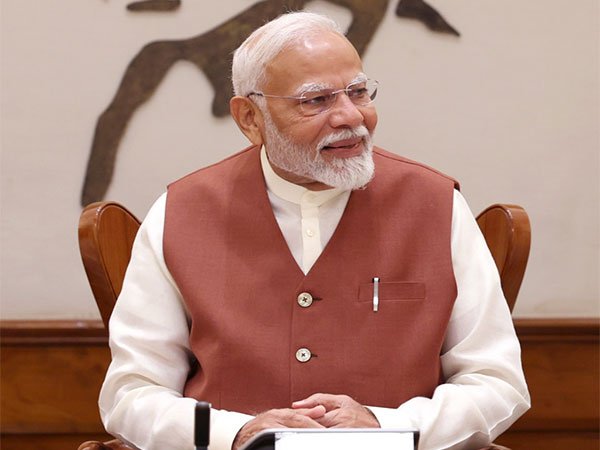
New Delhi, June 10,2026: A fresh political confrontation erupted on Wednesday as the Congress launched a sharp attack on Prime Minister Narendra Modi on the day he surpassed Jawaharlal Nehru to become India’s longest-serving Prime Minister, with senior Congress leader Jairam Ramesh accusing the Prime Minister of attempting to erase Nehru’s legacy while presiding over what he termed a “Murder of Democracy” in the country.
In a post on social media platform X, Ramesh highlighted what he described as the transformative achievements of independent India’s first five years under Jawaharlal Nehru’s leadership and contrasted them with the present political climate under the Modi government.
”Jawaharlal Nehru became Prime Minister of India on August 15, 1947, presiding over a stellar Cabinet — the likes of which have rarely been seen in the world. Over the next five years, modern India came into being,” Ramesh said.
The Congress leader listed a series of milestones achieved between 1947 and 1952, including the peaceful integration of more than 560 princely states into the Indian Union, the framing and adoption of the Constitution, the abolition of the zamindari system, the introduction of reservations for Scheduled Castes and Scheduled Tribes, the launch of major irrigation and power projects, and the establishment of India’s scientific and technological infrastructure, including in the field of nuclear energy.
He also underscored India’s emergence as a significant voice in global affairs during the period and recalled the preparation of electoral rolls covering nearly 170 million voters ahead of the country’s first general elections held between October 1951 and February 1952.
Ramesh credited several national leaders alongside Nehru for laying the foundations of modern India. “The 1947-52 record of achievements of India with Nehru as PM and in which stalwarts like Sardar Patel, Dr. Ambedkar, Dr. Rajendra Prasad, C. Rajagopalachari, and Maulana Abul Kalam Azad played such a pivotal role is now sought to be erased by Modi, who has a pathological fixation on Nehru,” he alleged.
Launching a direct attack on the Prime Minister, Ramesh said that while Modi may have crossed a “self-proclaimed and dubiously invented milestone”, he was “a millstone around India’s neck” and accused his government of weakening democratic institutions.
”The very same establishments of democracy — an independent Election Commission and a sacrosanct voter list — are now threatened,” he claimed.
The Congress general secretary also accused the government of undermining scientific temper and weakening educational institutions. Referring to recent controversies surrounding examinations, he said, “Scientific temper has been erased through the destruction of our educational institutions — as exposed most recently by the NEET-CBSE scandals.”
Ramesh further alleged that reservations for Scheduled Castes, Scheduled Tribes and Other Backward Classes had been diluted through privatisation and mechanisms such as “Not Found Suitable”.
Drawing an electoral comparison between Nehru and Modi, the Congress leader pointed out that Nehru secured decisive mandates in the 1952, 1957 and 1962 general elections. He argued that the BJP failed to secure an outright majority on its own in the 2024 Lok Sabha elections and relied on its National Democratic Alliance partners to form the government.
”Mr. Modi did NOT secure even a simple majority by a considerable margin in 2024 and had to hurriedly convene an NDA meeting, bypassing the BJP Parliamentary Party to anoint himself as PM. 2024 was most certainly not a mandate for Him,” Ramesh said.
The remarks came amid a broader political debate surrounding Prime Minister Modi’s historic tenure milestone, with the BJP celebrating the achievement as a reflection of sustained public trust and leadership continuity, while opposition parties have sought to contrast the government’s record with that of previous administrations, particularly the Nehru era.