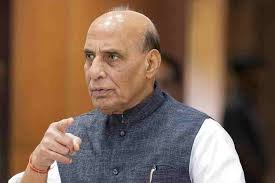
Tianjin/New Delhi, Sept 1,2025: Prime Minister Narendra Modi today underlined India’s vision for the Shanghai Cooperation Organisation (SCO), framing it around three pillars: Security, Connectivity and Opportunity (SCO).
Speaking at the SCO plenary session in Tianjin, Modi called on member-states to act against terrorism without double standards, ensure sovereignty in connectivity projects, and work together for economic progress.
With Pakistan Prime Minister Shehbaz Sharif in attendance, PM Modi raised the recent terror attack in Pahalgam, stressing that India has been facing the scourge of terrorism for over four decades. “Recently, we saw the worst side of terrorism in Pahalgam. I express my gratitude to the friendly countries that stood with us in this hour of grief,” he said.
Calling terrorism a “shared challenge for humanity,” the PM said it must be condemned in all its forms, adding that “some countries openly support terrorism,” in an indirect reference to Pakistan. He also highlighted India’s consistent stand against the funding of terror networks.
On regional connectivity, the Prime Minister sent a strong message linked to the China-Pakistan Economic Corridor (CPEC) without naming it directly. “Connectivity that bypasses sovereignty loses trust and meaning. Connectivity projects should respect the sovereignty of nations,” he said.
PM Modi also urged reforms in the United Nations, pointing out that global institutions must reflect current realities. He highlighted India’s economic progress and reform agenda, stressing that the SCO should create opportunities for growth and cooperation.
The Shanghai Cooperation Organisation (SCO) currently has 10 member states — India, Belarus, China, Iran, Kazakhstan, Kyrgyzstan, Pakistan, Russia, Tajikistan, and Uzbekistan. In addition, the grouping includes several dialogue partners and observer states.
India, which became a full member of the SCO in 2017 after holding observer status since 2005, has actively contributed to the organisation’s agenda. It chaired the SCO Council of Heads of Government in 2020 and the SCO Council of Heads of State from 2022 to 2023.
Chennai, Aug 29,2025: A business opportunity valued between Rs.40,000 and Rs.70,000 for the Indian space sector over the next 15 years was put out in the open by a senior official of the Indian Space Research Organisation (ISRO) at the recently held National Meet 2.0.
Speaking at the conference, Nilesh M Desai, Director, ISRO’s Space Applications Centre said India plans to orbit 103 earth observation and 19 technology demonstration satellites over the next 15 years or by 2040.
Desai also said plans to launch about 160 communication satellites including a constellation of 140 satellites in the Low Earth Orbit (LEO) and Medium Earth Orbit (MEO) to provide broadband connectivity like Starlink, OneWeb and others.
Desai said the 20 communication satellites will be placed in geosynchronous orbit (GEO) and will be made through ISRO/ NewSpace India Ltd (NSIL) and private players.
According to Desai, the earth observation satellites will also be realised by ISRO and private players.
The distribution of earth observation satellites based on weight will be as follows: one satellite weighing less than 100kg; 9 satellites ranging between 100-200 kg; 66 satellites – 200-500 kg; 38 satellites-500-1,000 kg and 5 satellites- over 1,000 kg.
“For the list above, the total business value should be around Rs.40,000-50,000 crore. Considering the present value it should escalate with time at least by five percent,” Dr.S.Somanath, former Chairman, ISRO told this writer.
“India is on steroids. We see unprecedented growth. We are at a tipping point. One can expect approximately 100 launches in the coming 5-6 years. Depending on the payload it will be a combination of launch vehicles being used,” reacted Jagat S Parikh, President, Strategy & Growth, Walchandnagar Industries Ltd to this writer.
The company is into heavy engineering catering to India’s strategic sectors like defence, nuclear, aerospace and several other industrial products.
When queried as to what the 119 earth observation satellites would translate into value satellite, rockets and ground equipment- industry experts gave varied estimates.
Even the lower estimate is lucrative enough for the sector as a whole to salivate.
”The blended cost per satellite will be about Rs.300 crore. So the 119 earth observation satellite business value will be about Rs.35,700 crore. As regards the rockets, the average cost per vehicle will be about Rs.350 crore. A total of 90 rockets will be needed, assuming 60 rockets with a single satellite and 30 rockets with two satellites. So the total business value of satellites plus rockets will be about Rs.71,700 crore,” Tapan Misra, Founder Sisir Radar and former Director of Space Applications Centre, ISRO told this writer.
It should be noted that the opportunity is not only for satellite manufacturers but also for the makers of rockets and ground equipment.
According to Misra, the planned 160 communication satellites will also cost at an average Rs.300 crore per satellite which will work out to Rs.48,000 crore. The rocket cost will also average to Rs.350 crore per vehicle as the orbit will be a mix of GEO/MEO/LEO.
On the other hand, space sector consultant Mukund K Rao’s estimate matches that of Somanath.
A former Deputy Director (Technology and Systems) at ISRO Rao told this writer that to put into orbit the 119 earth observation satellites, one may need about 50 rockets-a ballpark figure- as many satellites could get launched as piggyback or as a cluster.
“So we are talking of almost 170 space systems (satellites and rockets) in 15 years,” Rao said.
Stating ISRO must have worked out the cost model for the 119 earth observation satellites, Rao said the maximum weight of the total satellites as mentioned in Desai’s presentation-may be about 80,000 kg or could be lesser too.
“Globally the best launch cost today is less than USD 3,000/kg or maybe we can look at USD 5,000-6,000/kg in future. Indian launch systems can be very competitive in costs. This could mean, at a ballpark, a cost of around Rs.3,000-4000 crore for launching these 80,000 kg/ 119 satellites if our launch systems can be at comparable world costs and tremendous innovations built in to scale. Over 15 years it may average at Rs. 300 crore per year,” Rao remarked.
As regards the satellite cost, Rao said the recent Resourcesat cost was around Rs.100 crore.
“A global high class, high resolution PAN (panchromatic imaging) satellite in the US would cost about 100 million USD (about Rs.850 crore),” Rao said.
Stating that Indian costs have been proven to be much competitive based on the past earth observation missions, the cost of the proposed 119 satellites which are of varying weight and imaging capability class Rao guesses it is all about Rs.20,000-30,000 crore over 15 years at an average of Rs.2,000 crore per year.
There would be additional costs of ground systems, operations, insurance (if at all), applications/user segment development, business and marketing and others- mostly one time costs- and it would be about Rs.2,000-5,000 crore over 15 years, Rao added.
“We are talking of about Rs.40,000-50,000 crore over 15 years for this Plan that has been presented in the National Space meet. Not a great deal for India today,” Rao said.
Aug 27,2025: Donald Trump’s additional 25 per cent tariff on India have officially taken force, doubling duties on Indian imports to 50 per cent from Wednesday, August 27, after weeks of negotiations that have failed yield favourable results for New Delhi, which has hit out at the US administration for the “unjustified” levies.
The additional 25 per cent tariffs, imposed by US President Donald Trump citing Russian oil purchase, make India levies among the highest in the world, on par with Brazil and China.
Aug 25,2025: Iran’s Supreme Leader Ayatollah Ali Khamenei has said that the United States wants Tehran “to be obedient” to it, but the Iranian people will resist such “a grave insult”, state media reported on Sunday.
“They want Iran to be obedient to America. The Iranian nation will stand with all of its power against those who have such erroneous expectations,” Ayatollah Ali Khamenei said during a religious event on Sunday.
“People who ask us not to issue slogans against the US … to have direct negotiations with the US only see appearances … This issue is unsolvable”, he said amid a standoff with Western powers over Iran’s nuclear programme.
Khamenei’s comments come after Iran and European powers agreed on Friday to resume talks to try to restart full negotiations on curbing Tehran’s nuclear enrichment work. France, Britain and Germany said they could reactivate United Nations sanctions on Iran under a “snapback” mechanism if Tehran does not return to the table. They are expected to hold talks on Tuesday.
Tehran had suspended nuclear negotiations with the US after Washington and Israel bombed its nuclear sites during a 12-day war in June.
“The way forward for the enemy is to create discord” in Iran, Khamenei said, blaming “agents of America and the Zionist regime” – a reference to Israel – for seeking to sow division.
He urged Iranians to stay united to confront what he described as US efforts to subjugate the country.
The European states, along with the US, claim Iran is working towards developing nuclear weapons. But Iran has maintained that its nuclear programme is for civilian purposes.
In 2015, Iran signed a landmark nuclear deal with the US and European countries under which it agreed to scale down its nuclear ambitions in exchange for sanctions relief.
But during his first term in office, US President Donald Trump withdrew from the agreement in 2018 and slapped back sanctions as part of his “maximum pressure” policy. Washington’s closest regional ally, Israel, had also opposed the deal with Iran.
The 12-day war broke out in June 2025 as Tehran and Washington were due to hold their sixth round of talks on Iran’s nuclear programme. Negotiations that had begun weeks earlier were derailed by the conflict.
Relations between Tehran and Washington were severed after the 1979 Islamic revolution overthrew the pro-Western government of Shah Mohammad Reza Pahlavi.
New Delhi [India], August 22,2025: The Supreme Court on Friday modified its August 11 order, which had directed the rounding up of all stray dogs in the Delhi-NCR and prohibited their release from dog shelters. The court now allows the release of stray dogs back to the same area after sterilisation and immunisation.A three-judge bench of Justices Vikram Nath, Sandeep Mehta, and NV Anjaria ruled that stray dogs must be released after sterilisation and immunisation, except those infected with rabies or exhibiting aggressive behaviour.The court said that infected stray dogs shall be sterilised and immunised, but under no circumstances shall they be released back into the streets, and as far as possible, they shall be kept in separate shelters or pounds after sterilisation and immunisation.”The dogs that are picked up shall be sterilised, dewormed, vaccinated, and released back to the same area from where they were picked up,” it said while modifying the August 11 order, which directed that stray dogs shall not be released.The bench also restricted public feeding of stray dogs and directed the MCD to create dedicated feeding spaces in each municipal ward. “Under no condition shall the feeding of stray dogs on the streets be permitted. Dedicated feeding spaces of stray dogs to be created. There have been instances due to such feeding instances,” said the bench.The top court ordered that the feeding area shall be identified keeping in view the population of stray dogs in the ward, and notice boards must be placed mentioning that stray dogs shall be fed only in such areas.It further ordered that persons found feeding the dogs in contravention of its direction shall be liable to be proceeded with under the relevant framework.The apex court further stated that municipal authorities shall create a dedicated helpline number for reporting violations of its directions on feeding of stray dogs, and appropriate action must be taken against the NGOs or individuals concerned in case of violation of its order. “No individual or organisation shall cause hindrance to the effective implementation of the directions given above. In case, any public servant is obstructed, the violators will be liable to face prosecution for obstruction of discharge of public duty,” ordered the bench.It also said that desirous animal lovers shall be free to move an application to the concerned municipal authorities for the adoption of street dogs, upon which the identified selected dogs shall be tagged and given to him/her and it shall be the responsibility of the individual to ensure that the adopted dogs do not return to the streets.It further ordered that each individual dog lover and each NGO who have approached the court must deposit a sum of Rs 25,000 and Rs 2 lakhs, respectively, with the apex court, failing which they shall not be allowed to appear in the matter any further. The bench stated that the deposited amount shall be utilised for the creation of infrastructure and facilities for the stray dogs under the aegis of the respective municipal bodies.The apex court on Friday also expanded the scope of the proceedings on the menace of stray dogs and impleaded all states and Union Territories as parties to the case. The August 11 order was limited to the Delhi-National Capital Region (NCR) area only.It issued a notice to the Secretaries of the Department of Animal Husbandry in all states and Union Territories, seeking their response on the framing of a national policy to deal with the problem.The bench also directed its Registry to seek information from all High Courts where petitions are pending on the issue of stray dogs and ordered that all such matters will be transferred to the top court.The three-judge bench order came on pleas seeking a stay of its August 11 order of a two-judge bench to remove all stray dogs from the localities in the Delhi-NCR region and put them in shelter homes.On August 11, the top court ordered that all localities in Delhi, Noida, Ghaziabad, Gurugram and Faridabad should be made free of stray dogs and there should not be any compromise, and also made it clear that no captured animal will be released back on the streets.In the detailed order it has clarified that its directive was not driven by “momentary impulse”, rather, it came after thorough and careful deliberation, that the concerned authorities have consistently failed for over two decades to effectively address a serious issue that directly impacts public safety.A bench of Justice JB Pardiwala R Madadev had said that it has decided to take the matter in its hands becasue of the systematic failure of the authorities over the past two decades to address an issue that strikes at the heart of public safety.The bench had said that the directions given by it, as a court which functions for the welfare of the people, are both in the interest of humans as well as dogs and “this is not personal”.It had noted that as per the data available on the website of the Press Information Bureau, there were 37,15,713 reported dog bites in the country, and in Delhi alone, there were 25,201 dog bite cases.
Kolkata, Aug 21,2025: Weeks ahead of West Bengal’s biggest festival, Durga Puja, Prime Minister Narendra Modi is set to embark on yet another major infrastructure push in the state.
Modi will inaugurate and lay the foundation stone for road and railway projects worth over Rs 5,200 crore in Kolkata, including the commissioning of three crucial Metro Railway routes under the East-West Metro corridor.
These projects are expected to ease transportation in the congested city and its surrounding districts.
This visit comes weeks after the Prime Minister inaugurated development projects worth over Rs 5,500 crore in Durgapur on July 18. The projects focused on improving infrastructure in the steel city as well as in the backward districts of Bankura and Purulia, including piped natural gas (PNG) supply for households, commercial establishments, and industries.
He had also launched pollution control systems at Durgapur Steel Plant and Raghunathpur Thermal Power Station, and dedicated the Durgapur to Kolkata section (132 km) of the Durgapur–Haldia natural gas pipeline as part of the Pradhan Mantri Urja Ganga Project. The pipeline run through East Burdwan, Hooghly, and Nadia districts, enhancing energy access and development in South Bengal.
LONDON/KYIV/WASHINGTON, Aug 18,2025: European leaders will joined Volodymyr Zelenskiy to meet Donald Trump in Washington, seeking to shore up Zelenskiy’s position as the U.S. president presses Ukraine to accept a quick peace deal to end Europe’s deadliest war in 80 years.
Trump is leaning on Zelenskiy to strike an agreement after he met Russian President Vladimir Putin in Alaska and emerged more aligned with Moscow on seeking a peace deal instead of a ceasefire first.
Trump and Zelenskiy will meet on Monday. It is expected that they will have a bilateral meeting prior to the European leaders joining a larger conversation, according to a person briefed on the conversation.
Trump discussed Ukraine in several social media posts on Sunday. In one, he promised “BIG PROGRESS ON RUSSIA” in a social media post without specifying what this might be. In another, he said Zelenskiy could end the war “almost immediately, if he wants to” and seemed to indicate that reclaiming Crimea and joining NATO are off the table for Ukraine.
In a post on his Truth Social social media, Trump said: “Remember how it started. No getting back Obama given Crimea (12 years ago, without a shot being fired!), and NO GOING INTO NATO BY UKRAINE. Some things never change!!!”
Sources briefed on Moscow’s thinking told Reuters the U.S. and Russian leaders have discussed proposals for Russia to relinquish tiny pockets of occupied Ukraine in exchange for Kyiv ceding a swathe of fortified land in the east and freezing the front lines elsewhere.
Mikhail Ulyanov, Russia’s envoy to international organizations in Vienna, said Russia agreed that any peace agreement on Ukraine must provide security guarantees to Kyiv.
New Delhi, Aug 15,2025: Prime Minister Narendra Modi, in an oblique message to US from Red Fort,
today declared “India will not compromise’’ on the interests of farmers and emphasized that he stood
like a wall for them and livestock keepers protecting their rights and livelihoods against any
detrimental policy.
Addressing the nation on India’s 79th Independence Day he said Agriculture remains a cornerstone of India’s development, with India No. 1 in milk, pulses and jute, and No. 2 in rice, wheat, cotton, fruits and vegetables. Agricultural exports have crossed Rs 4 lakh crore, reflecting the nation’s global competitiveness.
Coinciding with Janamashtami (birth of Lord Krishna) the Prime Minister announced ‘Mission Sudarshan Chakra’ to create a powerful weapon system to thwart any enemy attack and strengthen India’s offensive and deterrent capabilities.
Drawing inspiration from India’s rich cultural and mythological heritage, he said “India is launching Mission Sudarshan Chakra to create a powerful weapon system to thwart any attempt by enemies to attack us.” The initiative is designed to enhance rapid, precise and powerful Defence responses reinforcing India’s strategic autonomy.
“All public places will be covered by an expanded nationwide security shield by 2035,” ensuring comprehensive protection for the nation while showcasing India’s commitment to self-reliant Defence.
Hailing Operation Sindoor as a demonstration of India’s strategic autonomy, the Prime Minister said that using Made-in-India weapons, the operation dismantled terror networks and Pakistan-based infrastructure, signaling a new era where India will no longer accept nuclear blackmail or threats on foreign terms.
He reaffirmed that India will no longer compromise on its national interests and the operation underscored the country’s ability to act swiftly and decisively, relying entirely on indigenous technology and Defence platforms.
In his 103 minute speech, his longest, the Prime Minister announced a roadmap for Viksit Bharat by 2047 with sharp focus on self-reliance, innovation and citizen empowerment.
On the issue of the Indus Waters Treaty, he made it unequivocally clear that ‘’blood and water will not flow together. “India has now decided, blood and water will not flow together. The people have realized that the Indus Waters Treaty was unjust. Water from the Indus River system irrigated enemy lands while our farmers suffered.”
The Prime Minister announced formation of a Task Force for Next-Generation Economic Reforms aimed at overhauling laws, rules and procedures that govern economic activity.
He also announced Next-Generation GST reforms by Diwali to reduce taxes on daily essentials, benefiting MSMEs, local vendors and consumers, while simultaneously stimulating economic growth and creating a more efficient, citizen-friendly economy.
Referring to Atmanirbhar Bharat he called for awareness and commitment to becoming self-reliant and said India will roll out its first Made-in-India semiconductor chip by 2025 and is opening the nuclear sector to private players.
He also announced plans to increase India’s nuclear power generation capacity tenfold by 2047, with 10 new nuclear reactors underway, ensuring energy security and sustainable growth.
He said preparations are on for India’s own space station, building on the success of the Gaganyaan mission.
Warning about illegal immigration and infiltration, the Prime Minister stressed the need to protect border areas and citizens’ livelihoods and announced the High-Powered Demography Mission aimed at ensuring India’s unity, integrity, and security, tackling both strategic and social challenges.
Highlighting the steps to secure resources critical for its future, he said that through the National Critical Minerals Mission, India is exploring 1,200 sites to ensure access to minerals essential for energy, industry and Defence. Controlling these minerals strengthens India’s strategic autonomy, keeping its industrial and Defence sectors truly self-reliant.
Complementing this, the National Deepwater Exploration Mission will harness India’s offshore energy resources, reducing dependence on foreign fuel imports and boosting energy self-reliance, marking another step toward a fully independent and powerful India, the Prime Minister said.
New Delhi, Aug 14,2025: The Permanent Court of Arbitration at the Hague has, in an Award on Issues of General Interpretation of the Indus Water Treaty (IWT), said India is permitted by the Treaty to construct on the tributaries of the Indus, Jhelum and Chenab (“Western Rivers”) even though the general rule is that India shall ‘’let flow’’ the waters of the Western Rivers for Pakistan’s use.
The Court in an Award on August 8, said that even though the ‘’general rule’’ is that India shall “let flow” the waters of the Western Rivers for Pakistan’s use, there are certain specified exceptions to this rule, including in relation to the generation of hydroelectric power.
In the Award the Court did not address the application of its findings to the specific circumstances of the Kishenganga Hydro-Electric Plant (“KHEP”) or Ratle Hydro-Electric Plant (“RHEP”), two Indian projects presented in Pakistan’s Request for Arbitration.
‘’This arbitration concerns the interpretation and application of the Indus Waters Treaty to certain design elements of the run-of-river hydro-electric plants that India is permitted by the Treaty to construct on the tributaries of the Indus, Jhelum, and Chenab Rivers (the “Western Rivers”).
About the overall Approach to the Interpretation of Article III and Part 3 of Annexure D the general rule is that India shall “let flow” the waters of the Western Rivers.
However, there are certain specified exceptions to this rule, including in relation to the generation of hydroelectric power, the Court said.
India’s primary objection to the IWT arises out of from concerns about Pakistan’s support for cross-border terrorism and its implications for India’s national security and water resource management. India has linked the issue of water sharing with the broader context of bilateral relations, asserting that “blood and water cannot flow together”.
India stresses the need to re-negotiate the treaty because of climate change and its impact on water availability. The Treaty, signed in 1960, does not adequately address the challenges posed by climate change, necessitating a renegotiation of its provisions. India argues that the Treaty’s restrictions on hydropower projects, particularly on the Western Rivers (Chenab, Jhelum, and Indus), need to be revisited in light of modern dam engineering and the need for increased water storage and management.
India has formally notified Pakistan to seek modifications to the IWT, citing the need to address the issues of climate change, security concerns, and disputes over hydropower projects. India’s request for modifications in and renegotiation of the Treaty based on Article XII (3) of the IWT, is being resisted by Pakistan, fearing reduction in its water share.
India does not accept the court’s jurisdiction and insists on using a neutral expert mechanism.Pakistan has welcomed the Court’s Award and threatened India with serious consequences if the IWT was ‘’touched’’.
Brussels, Aug 13,2025: Ahead of the upcoming Trump-Putin summit in Alaska, former NATO Deputy Supreme Allied Commander Europe, General Sir Richard Shirreff, has expressed doubts whether the summit will at all prove effective in ending the war, claiming that only a ‘bloody nose’ will force the Kremlin to end the conflict.
“Russia has to recognise and Putin has to recognise that Zelenskyy is president of Ukraine, recognise the Ukrainian constitution and Ukraine’s right to exist as a sovereign state. And that is only going to happen … when Russia gets a really bloody nose.
“And for that to happen, we need to see some proper strategic thinking from NATO – from the president of the United States – that recognises that this is about transatlantic security,” he told BBC.
He further advocated for Ukraine’s membership into the NATO, stating that it was imperative to ending the war.
“Even if Putin moves on or falls under a bus, we’re probably likely to get somebody in place just as hard-line, just as ultra-nationalistic, and just as determined to press on (with Russia’s takeover of Ukraine),” Shirreff said.
“So, I think we have to recognise that European security means deterrence – a band of deterrent steel, as I’ve said many times – from the Baltic to the Black Sea, with Ukraine as a NATO member.
“Now, however far-fetched that may seem from where we are at the moment, that’s the reality. … Any sort of compromise now, any so-called freezing of conflict, is only going to continue to postpone it.”
Ukrainian President Volodymyr Zelensky has warned the US that it will not agree to any territorial concessions, nor accept a decision in which it has no part in, stating “Talk about us, without us, it will not work.”
He further criticised the US mediations in ending the three-year-long war, claiming that the diplomatic discussions led by Washington on the matter failed to address key Ukrainian demands, including security guarantees to prevent future Russian aggression and including Europe in negotiations and rehabilitate.
New Delhi, August 9,2025: The Election Commission of India (ECI) said in a press release on Friday that the Enumeration Forms for 7.24 crore electors were collected out of about eight crore forms distributed and downloaded during the Enumeration Phase of the Special Intensive Revision (SIR) of the voter list in Bihar. Giving the reasoning behind the gap between the forms distributed and collected, the ECI stated, “BLO did not find these electors or did not get back their Enumeration Forms because became electors in other States/UTs, or were not found in existence, or did not submit the form till 25 July, or were not willing to register as an elector for some reason or other (Para iv of Enumeration Form at Page 17 of SIR order refers).”The ECI released the cumulative data for the forms distributed, downloaded, collected, and digitised. The press release also shared the graphical data for the Enumeration Forms distributed, collected and digitised daily. According to ECI’s graph, the gap of 65 lakh electors is attributed to 22 lakh deceased individuals, 36 lakh who have either permanently shifted from Bihar or were not found, and the remaining 7 lakh who were enrolled in multiple places. According to the press note, the objective of SIR is to ensure that no eligible elector is left behind and no ineligible elector gets included. Any genuine electors can still be added back in the electoral rolls during the Claims and Objections period from 1st August to 1st September 2025. Earlier today, ECI reiterated that no claim or objection has been submitted by any political party regarding the draft electoral rolls in Bihar. It has been over a week since the EC asked to submit claims and objections to rectify any errors in the draft electoral roll of Bihar, which was published on August 1.The Election Commission has been repeatedly asserting that no eligible elector will be left out and no ineligible elector will be included in the final electoral roll of Bihar. However, the EC has received 6,257 claims and objections directly from the electors with respect to the draft roll till today, said the ECI in a daily bulletin on the special intensive revision (SIR) of the electoral roll in Bihar
New Delhi, Aug 9,2025: At a press briefing here, Union Minister Bhupender Yadav criticised the Leader of Opposition in Lok Sabha Rahul Gandhi’s for adopting an “unbecoming tone” towards the Election Commission, warning officials of repercussions for allegedly facilitating the ruling party’s purported malpractices.
“Rahul Gandhi’s lies about ‘electoral fraud’ would be laughable if they were not so dangerous for Indian democracy,” he said, underscoring the sanctity of constitutional institutions. Yadav emphasised, “such language is unprecedented and inappropriate.”
Referring to official data from the Election Commission, Yadav clarified that the number of voters in the November 2024 Maharashtra Assembly polls rose by over 40 lakh compared to the Lok Sabha elections held earlier that year — far less than the figure of one crore alleged by Rahul Gandhi.
“The Opposition leader had evidently invested considerable time in preparing his narrative,” Yadav observed, “but the fundamental premise of his accusation stands disproved.” He accused Gandhi of orchestrating an elaborate campaign to propagate misinformation, adding, “Henceforth, every claim from his side should be met with a 60% discount.”
Highlighting several constituencies such as Madha, Mohol, Nagpur West, and Nagpur North — all won by Congress or its allies — Yadav pointed out the corresponding increase in voter numbers in these areas, which directly contradicts the opposition’s assertions.
Addressing Gandhi’s promise of evidence akin to an “atom bomb,” Yadav dismissed it as a futile attempt at self-sabotage, reiterating, “This is like cutting the branch on which one is seated,” and called rhetoric against the Election Commission an assault on India’s democratic fabric.
“If there are genuine grievances regarding the electoral process,” Yadav suggested, “ Gandhi should substantiate his allegations through a sworn affidavit to the Election Commission, rather than resorting to media theatrics.”
He accused the Congress of persistently disseminating falsehoods aimed at discrediting the electoral body following its electoral setbacks. “Their strategy is simple — lie and evade accountability,” he stated, alluding to the opposition’s parliamentary disruptions over the Special Intensive Review of Bihar’s electoral rolls as attempts to avoid substantive debate.
“The Congress is systematically undermining our constitutional institutions for familial political gains,” Yadav noted, citing Gandhi’s earlier disparagement of the armed forces and noting the latter’s subsequent apology to the Supreme Court for unfounded claims.
The controversy erupted after Rahul Gandhi, yesterday, presented an “analysis” of electoral data from a Karnataka Lok Sabha constituency during the 2024 elections. He alleged “massive criminal fraud” orchestrated by the BJP with the complicity of the Election Commission, branding it a “crime against the Constitution.” Gandhi has also accused the BJP-led alliance of rigging the Maharashtra Assembly polls to secure victory.
WASHINGTON,Aug 07,2025: President Donald Trump signed an executive order Wednesday to place an additional 25% tariff on India for its purchases of Russian oil, bringing the combined tariffs imposed by the United States on its ally to 50%.
The tariffs would go into effect 21 days after the signing of the order, meaning that both India and Russia might have time to negotiate with the administration on the import taxes.
Trump’s moves could scramble the economic trajectory of India, which until recently was seen as an alternative to China by American companies looking to relocate their manufacturing. China also buys oil from Russia, but it was not included in the order signed by the Republican president.
As part of a negotiating period with Beijing, Trump has placed 30% tariffs on goods from China, a rate that is smaller than the combined import taxes with which he has threatened New Delhi.
Trump had previewed for reporters Tuesday that the tariffs would be coming. During an event in the Oval Office Wednesday with Apple CEO Tim Cook, Trump affirmed the 50% tariff number, not giving a specific answers as to whether additional tariffs on India would be dropped if there were a deal between Russia and Ukraine.
“We’ll determine that later,” Trump said. “But right now they’re paying a 50% tariff.”
The White House said Wednesday that Trump could meet in person with Russian President Vladimir Putin as soon as next week as he seeks to broker an end to the war.
The Indian government on Wednesday called the additional tariffs “unfortunate.”
“We reiterate that these actions are unfair, unjustified and unreasonable,” Foreign Ministry spokesman Randhir Jaiswal said in a statement, adding that India would take all actions necessary to protect its interests.
Jaiswal said India has already made its stand clear that the country’s imports were based on market factors and were part of an overall objective of ensuring energy security for its 1.4 billion people.
In 2024, the U.S. ran a $45.8 billion trade deficit in goods with India, meaning America imported more from India than it exported, according to the U.S. Census Bureau. American consumers and businesses buy pharmaceutical drugs, precious stones and textiles and apparel from India, among other goods.
As the world’s largest country, India represented a way for the U.S. to counter China’s influence in Asia. But India has not supported the Ukraine-related sanctions by the U.S. and its allies on Moscow even as India’s leaders have maintained that they want peace.
The U.S. and China are currently in negotiations on trade, with Washington imposing a 30% tariff on Chinese goods and facing a 10% retaliatory tax from Beijing on American products.
The planned tariffs on India contradict past efforts by the Biden administration and other nations in the Group of Seven leading industrialized nations that encouraged India to buy cheap Russian oil through a price cap imposed in 2022. The nations collectively capped Russian oil a $60 per barrel at a time when prices in the market were meaningfully higher.
The intent was to deprive the Kremlin of revenue to fund its war in Ukraine, forcing the Russian government either to sell its oil at a discount or divert money for a costly alternative shipping network.
The price cap was rolled out to equal parts skepticism and hopefulness that the policy would stave off Putin’s invasion of Ukraine.
The cap has required shipping and insurance companies to refuse to handle oil shipments above the cap, though Russia has been able to evade the cap by shipping oil on a “shadow fleet” of old vessels using insurers and trading companies located in countries that are not enforcing sanctions.
New Delhi, Aug 6,2025: Prime Minister Narendra Modi inaugurated Kartavya Bhavan-3, one of the Central Secretariat buildings under the Central Vista redevelopment project here, and inspected the various facilities incorporated in the environment-friendly state-of-the-art seven-storeyed building.
As part of the Central Vista Project, it is the first among several ‘Common Central Secretariat’ buildings aimed at streamlining administrative processes and enabling agile governance. The target is to have all 10 ready within the next two years.
Kartavya Bhavan-3 situated near Kartvaya Path road erstwhile known as Rajpath marks a significant milestone in the government’s commitment to modern, efficient, and citizen-centric governance, reflecting the Prime Minister’s vision.
Union Minister for Housing and Urban Affairs, Manohar Lal besides senior officials, was also present on the occasion.
By bringing ministries together under one roof and adopting state-of-the-art infrastructure, the Common Central Secretariat aims to enhance inter-ministerial coordination and ensure a more accountable administrative ecosystem, said an official statement here.
Currently, several key ministries operate from ageing buildings such as Shastri Bhavan, Krishi Bhavan, Udyog Bhavan, and Nirman Bhavan, constructed between the 1950s and 1970s, which have become structurally outdated and inefficient. It is expected that the new buildings will reduce maintenance costs, improve productivity, and offer better facilities for government employees.
Kartavya Bhawan-3 spans approximately 1.5 lakh sq mt will house offices of the Ministry of Home Affairs, Ministry of External Affairs, Ministry of Rural Development, Ministry of MSME, Department of Personnel and Training, Ministry of Petroleum and Natural Gas, and the Office of the Principal Scientific Adviser (PSA).
It has various sustainability features including a wastewater treatment and reuse system designed to meet a significant portion of the building’s water requirements. The building is designed to consume 30 per cent less energy. Special glass windows help maintain cooling and reduce external noise. Energy-efficient LED lighting, sensors to switch off lights when not required, smart lifts for power saving, and an advanced energy management system contribute to overall energy conservation, as per the statement.
The rooftop solar panels of Kartavya Bhavan-3 are expected to generate over 5.34 lakh units of electricity annually. Additionally, electric vehicle charging stations have been provided to support sustainable transportation, it added
New Delhi, Aug 5,2025: The Supreme Court today took note of a Public Interest Litigation (PIL) seeking permanent disqualification of Members of Parliament (MPs) and Members of Legislative Assemblies (MLAs) upon conviction in criminal cases, and directed that the matter be placed before the Chief Justice of India (CJI) BR Gavai for listing before an appropriate larger Bench.
The PIL, filed by Advocate Ashwini Kumar Upadhyay, challenges the constitutional validity of provisions under Section 8 of the Representation of the People Act, 1951, which currently bar convicted legislators from contesting elections only for six years after completing their sentence.
Senior Advocate Vijay Hansaria mentioned the matter before a Bench of Justice Surya Kant and Justice Joymalya Bagchi, urging for an early hearing.
“This is a matter of grave concern. Orders have been passed from time to time. The February 10 order requires that it be listed before a three-judge bench,” Hansaria submitted.
The Bench acknowledged the urgency and referred to paragraphs 4 and 5 of the February 10, 2025 order passed by a Bench led by Justice Dipankar Datta, directing that the matter be placed before the CJI for further directions.
The plea is now expected to be heard finally on October 20, subject to the CJI’s listing.
In February 2025, the Union government opposed the plea, arguing that a lifetime disqualification of elected representatives was a matter purely within the domain of Parliament and not for the judiciary to decide.
The Centre, through the Legislative Department, maintained that while the court may declare a provision unconstitutional under its power of judicial review, it cannot rewrite legislation to substitute “lifetime” for “six years” as suggested by the petitioner.
“The relief sought effectively asks the Court to read ‘lifetime’ instead of ‘six years’ in all sub-sections of Section 8. This is unknown to judicial review and constitutional law,” the Centre submitted.
The government emphasized that Parliament has the discretion to decide what duration of disqualification is appropriate, keeping in view principles of proportionality and reasonableness. “It is one thing to say that Parliament has the power to impose a lifetime ban, and another to say that it must necessarily exercise that power in all cases,” it said.
The Centre further argued that the PIL failed to distinguish between the basis for disqualification (i.e., conviction) and the effect of disqualification (i.e., its duration). It noted that Indian penal statutes often impose time-bound restrictions on rights and freedoms post-conviction, and that extending these indefinitely would be unduly harsh and disproportionate.
“At the end of the prescribed time, penalties cease to operate automatically. Deterrence is ensured, while undue harshness is avoided,” the government stated.
It also reiterated that any direction to Parliament on how to draft or amend laws would be beyond the constitutional powers of the judiciary.
The PIL raises a larger question regarding the criminalisation of politics, an issue repeatedly flagged by the Supreme Court in the past.
The Court has, over the years, issued directions for the expeditious trial of criminal cases against lawmakers and for greater transparency in candidate disclosures.
As the matter now heads to a larger Bench, the decision could have far-reaching implications for electoral reforms, legislative accountability, and the scope of judicial intervention in matters of legislative policy.
Brasília, Aug 5,2025: The Supreme Court of Brazil has ordered the house arrest of former President Jair Bolsonaro, who is on trial over an alleged plot to overturn the results of the 2022 presidential election.
Justice Alexandre de Moraes issued the order Monday, saying Bolsonaro had failed to comply with restrictions previously imposed on him by the court, including use of social media and cell phones, CNN reports.
The order said Bolsonaro recorded speeches to be posted on other users’ social media accounts in which his ankle monitor is visible, which Moraes said defied an order prohibiting “exploitation of interviews or public or private speeches posted on third parties’ social media”.
Bolsonaro will serve house arrest at his residence and will not be allowed to have visitors, except for his attorneys and people authorized by the court.
The former president is also prohibited from using a cell phone, directly or through third parties.
Reacting to the SC ruling, Bolsonaro’s eldest son Senator Flavio Bolsonaro criticized the court’s decision, saying on CNN Brasil that his father had never defied a court order.
Ranchi, Aug 4 (UNI),2025: Shibu Soren did not begin his life with the ambition to govern. Born in 1944 in a modest tribal household in Nemra village, Ramgarh, he grew up witnessing systemic injustice, and lived the brutal reality of land seizures, forest exclusion, and social alienation. He didn’t enter politics for power. He entered it because people like him had no power.
In that sense, Shibu Soren never really left the movement even after becoming the government.
Known widely as Dishom Guru, Soren was many things at once — a folk hero, a feared agitator, a reluctant administrator, and, above all, the unflinching voice of Jharkhand’s tribal soul. He spent his early political years organising ‘hul” (rebellions) against land dispossession and bonded labour, leading to the formation of the Jharkhand Mukti Morcha in the early 1970s — a party that wasn’t just a political outfit, but a social assertion.
While national politics often overlooked tribal issues, Soren forced them on to the agenda with grit, sometimes fury. He wasn’t polished, but he was grounded. He wasn’t fluent in policy jargon, but he spoke a language that echoed in the hills of Santhal Pargana and the forests of Chaibasa.
His fight culminated in the creation of Jharkhand in 2000 — a state carved from the dreams of dispossessed people who had found in Soren a leader who looked like them, spoke like them, and suffered like them.
He served as Jharkhand’s Chief Minister thrice, though his administrative tenures were often brief and tumultuous. He also served as Union Coal Minister in 2004 during the UPA government. But governance was never his strong suit. His strength lay in symbolism — in what he represented more than what he ruled. Even when political storms engulfed him, controversies shadowed him, and allies deserted him, his identity as the father of Jharkhand’s statehood remained untouched.
Soren was not without contradictions. His movement was pure, his politics often murky. The shift from street to seat, from slogans to bureaucracy, was never smooth. But for the millions who saw him as Guruji, these imperfections only humanised him further. He was one of their own — flawed, fierce, and faithful.
In his final years, Soren withdrew from the public eye but remained the ideological spine of the Jharkhand Mukti Morcha. His son Hemant rose to leadership, while his daughter-in-law Kalpana and youngest son Basant entered the Assembly. The family’s political tree branched out, but the roots stayed deep in the soil Shibu once tilled with anger and hope. On August 4, at 8:56 am, Shibu Soren breathed his last at a hospital in New Delhi. The news sent a wave of silence through Jharkhand — a silence not of surprise, but of reverence. He had been unwell for weeks, battling infections and age, but perhaps also tired of a world that had moved far from the kind of politics he once embodied.
He is survived by his wife, sons Hemant and Basant, and daughter-in-law Kalpana — all in politics. His eldest son, Durga Soren, died young; Durga’s wife, Sita Soren, is with the Bharatiya Janata Party.
For Jharkhand, his passing is not just the loss of a leader but the fading of a generation that lived its politics before it performed it. The hills may remain, the forests may endure, but the voice that once roared in their defence has now fallen silent.
Yet in every cry for land, every protest for dignity, and every whispered story of resistance, Shibu Soren will live on — not as a politician, but as the conscience of a state that he helped dream into existence.
July 31,2025: Lithuania’s Prime Minister Gintautas Paluckas has stepped down following investigations into his business dealings that prompted protests in the Baltic country’s capital calling for his resignation.
The country’s president, Gitanas Nauseda, announced Paluckas’ resignation to the media on Thursday morning.
Paluckas confirmed the news in a statement sent by his Social Democrat Party.
Paluckas ascended to the role late last year after a three-party coalition formed following parliamentary elections in October.
His resignation is now likely to bring down the whole government, with his cabinet expected to also resign. New coalition talks are expected to start soon.
Paluckas has faced scandals over his business dealings, including some that occurred more than a decade ago. Media investigations revealed that he had never paid a significant part of a 16,500-euro ($19,000) fine after he was convicted in 2012 of mishandling the bidding process for the capital Vilnius’s rat extermination services.
Paluckas, at the time, was Vilnius’s municipal administration director, and judges ruled that he had abused his official position by illegally granting privileges to the company that offered the highest bid.
He was sentenced to two years in prison but was ultimately not imprisoned.
Since the media investigations, Lithuania’s anticorruption and law enforcement agencies have also launched their probes into Paluckas.
He has denied any wrongdoing and instead called the attacks on his business dealings parts of a “coordinated attack” by political opponents.
The resignation of the prime minister comes only weeks before a planned joint military exercise between Lithuania’s neighbours, Russia and Belarus, highlighting the precarious position the country finds itself in.
New Delhi, July 31,2025: Day after announcing 25 percent tariff with ‘’penalty’’ against India for
buying military equipment and energy from Russia, US President Donald Trump today said a trade deal with Pakistan had been concluded and both countries (India and Russia) could take their ‘’dead economies’’ down together.
He said the US had just concluded a trade deal with Pakistan where Pakistan and US could work together on developing their massive oil reserves and may be they (Pakistan) will sell their oil to India.
‘’We have just concluded a deal with the country of Pakistan whereby Pakistan and the United States will work together on developing their massive oil reserves. We are in the process of choosing the oil company that will lead this partnership. Who knows may be they’ll be selling oil to India some day.’’
He said he does not care what India does with Russia. ‘’They can take their dead economies down together, for all I care,’’ he said in a series of tweets on his social media platform.
President Trump had yesterday announced on Truth Social that 25 per cent tariff would be imposed on India along with ‘’penalty’’ from August one for buying military equipment and energy from Russia.
‘’All things are not good! India will therefore be paying a tariff of 25 percent plus a penalty starting August one,’’ he said. Describing India as ‘’our friend,’’ he said US had done relatively little business with India because their (India’s) tariffs are too high.
Commenting on Trump’s tariffs an official spokesman here said the Government attaches utmost importance to protecting and promoting the welfare of our farmers, entrepreneurs and MSMEs and will take all necessary steps to secure our national interest.
‘’The Government will take all steps necessary to secure our national interest, as has been the case with other trade agreements including the latest Comprehensive Economic and Trade Agreement with the UK,’’ the spokesman said.
He said the Government had taken note of the statement by the US President on bilateral trade. The Government is studying its implications.
The spokesman said India and the US have been engaged in negotiations on concluding a fair, balanced and mutually beneficial bilateral trade agreement over the last few months and India remains committed to that objective.
Trump said he is ‘’very busy’’ in the White House working on Trade Deals and he had spoken to the leaders of many countries all of whom wanted make the United States ‘’Extremely Happy.’’
In another tweet he said the US has a ‘’massive trade deficit with India.’’ The US had done very little business with India, their tariffs are too high among the highest in the world.
‘’Russia and the US do almost no business together. Let’s keep it that way,’’ he said.
Mumbai July 31,2025: Seventeen years after a bomb blast rattled Malegaon, a Special Court of the National Investigation Agency (NIA) today acquitted all the seven accused including former BJP MP Paragya Singh Thakur and others who stood trial in the political sensitive terrorism case.
BJP leader and former MP Pragya Singh Thakur, Lieutenant Colonel Prasad Purohit, Major Ramesh Upadhyay (retired), Ajay Rahirkar, Sameer Kulkarni, Sudhakar Chaturvedi and Sudhakar Dhar Dwivedi all stand acquitted.
Special Judge AK Lahoti, who presides over the NIA court, announced the acquittals.
“Terror has no religion because no religion can advocate violence,” the special NIA court judge, AK Lahoti, said.
Advocate Ranjit Nair said, “I was representing accused number 11 Sudhakar Chaturvedi. Court has acquitted him. The Court has observed that prosecution cannot present any proof against accused.”
Briefing the media, Advocate Prakash Salsingikar said, “The court has said that this incident is very bad. However, the loss of victims can’t be fulfilled but the court has asked for compensation to all those people.”
Significant security measures have been implemented around the Sessions Court in South Mumbai ahead of the ruling, with a heavy police presence deployed outside the courthouse complex.
The explosion on the night of September 29, 2008, near Bhikku Chowk in Malegaon, killed six people and injured over a hundred. A low-intensity bmb fitted to a motorcycle detonated near a busy intersection, triggering panic and chaos in the communally sensitive town.
Initially investigated by the Maharashtra Anti-Terrorism Squad (ATS), the case was taken over by the National Investigation Agency (NIA) in 2011. The NIA re-registered the offence and conducted further investigations. Since then, multiple chargesheets and supplementary reports have been filed. The trial began in 2018 after charges were formally framed against seven accused.
New Delhi, July 30,2025: Foreign Minister S Jaishankar today reiterated that US President Donald Trump had no role in stopping India’s military operation against Pakistan during Operation Sindoor.
Speaking in the Rajya Sabha while resuming the discussion on “India’s strong, successful, and decisive Operation Sindoor in response to the terrorist attack in Pahalgam,” Jaishankar said there was no conversation between Prime Minister Narendra Modi and President Trump to halt the military action. He added, “There was no telephonic conversation between the two leaders from April 22 to June 16.”
Rejecting opposition allegations of diplomatic failure during Operation Sindoor, the Foreign Minister stated that Indian diplomacy was perfectly on track given that the BRICS summit condemned the Pahalgam terrorist attack.
“The BRICS countries condemned the conspirators behind the Pahalgam attack and cross-border terrorism, whereas in the BRICS summit statement after the Mumbai attacks, cross-border terrorism was not mentioned,” he said. He also highlighted that Germany, France, Russia, and the European Union condemned the Pahalgam attack.
Jaishankar informed that the United Nations Security Council issued a statement condemning the Pahalgam terrorist attack on April 25, when Pakistan was still a member of the Council and India was not a member of the global body.
Praising the valour of Indian armed forces during Operation Sindoor, he said the military struck terrorist hideouts in Bahawalpur and Muridke with precision. “These were strongholds of terrorism in Pakistan. Several Pakistani airports were also targeted. This was a major success of Operation Sindoor,” he said.
Addressing those demanding proof of the Operation’s success, he suggested watching videos on YouTube showing terrorists’ funerals after they were killed, which would reveal the nature of the Indian Army’s action.
Acknowledging the closeness between Pakistan and China, Jaishankar said both countries have come closer over time, not overnight. Referring to incidents during Congress governments, he pointed out that Pakistan-China relations have had moments of proximity in the past as well.
Taking a swipe at former Prime Minister Jawaharlal Nehru, the Foreign Minister recalled that during the Indus Waters Treaty, Nehru was more concerned about Pakistani farmers than Indian farmers. He said Nehru had stated in the Lok Sabha that the water agreement would benefit farmers in West Punjab, which was then part of Pakistan.
Jaishankar also appreciated the role of Members of Parliament in various all-party delegations sent to different countries to clarify India’s position on Operation Sindoor. He mentioned that India’s delegation visited 33 countries, with MPs like Shashi Tharoor, Ravi Shankar Prasad, Sanjay Jha, Supriya Sule, and Srikant Shinde effectively presenting India’s viewpoint to the world.
London, July 29,2025: Frustrated with Russian President Vladimir Putin for not agreeing to the terms of ceasefire with Ukraine, US Donald Trump has presented a new, shorter deadline of “10 or 12 days” for Russia to agree to a ceasefire over the war in Ukraine from Monday, which Ukrainian President Volodymr Zelensky has called “extremely significant”.
The US president said there was “no reason” in waiting any longer as no progress towards peace had been made, reports BBC.
Two weeks ago, Trump said President Putin had 50 days to end the war or Russia would face severe tariffs.
Speaking to reporters after a meeting with UK Prime Minister Keir Starmer in Scotland yesterday, Trump again expressed his disapproval at Putin’s actions in Ukraine, where war rages on three and a half years into Russia’s full-scale invasion.