August 26,2026: Iran and Oman have agreed on a new temporary route for shipping in the Strait of Hormuz, but insisted that the waterway will not reopen until the United States fulfils its commitments under an interim peace deal signed in June.
The remarks by Kazem Gharibabadi, Iran’s deputy foreign minister for legal and international affairs, came on Tuesday, after Iran and Oman’s top diplomats held talks in Tehran to finalise the details of a phased framework for managing the strait.
Iran and Oman, both coastal nations on the strait, have been in on-and-off talks for weeks about controlling traffic through the strategic waterway, which handled one-fifth of global oil and liquefied natural gas shipments before the US-Israel war on Tehran began in February.
Most shipping in the strait has been shut down since then.
Gharibabadi, speaking on state television, said Iran and Oman had agreed the new route’s entry “would be through our territorial waters, and part of the exit route would also be through our territorial waters”.
The transit corridor would be seven miles (11.3km) wide, he said.
“The agreed-upon transit route with Oman is a temporary route,” he added.
Earlier on Tuesday, Iran’s Foreign Minister Abbas Araghchi met with his Omani counterpart, Badr Albusaidi, in Tehran to discuss the temporary navigation corridor as well as a project to clear mines from the strait, according to a joint statement.
Albusaidi said on X he hoped the countries would “soon announce” the corridor, adding that “future management of the strait and a permanent solution will follow in due course.”
Technical talks are planned to develop a long-term arrangement, including mechanisms for information sharing and navigational and security services, according to the statement.
Mines in Hormuz
The Strait of Hormuz became a flashpoint after Tehran responded to the US-Israel war by closing the waterway. It then announced a new shipping route through its territorial waters, bypassing the internationally recognised Traffic Separation Scheme adopted by the International Maritime Organization (IMO) in 1968. Tehran said that route had been mined.
Then in June, when Iran and the US signed a Memorandum of Understanding (MoU) to end the war, Oman and the IMO announced a new transit corridor in the Strait of Hormuz – backed by the US – that hugged the Omani coast.
Iran said the so-called southern route violated the MoU and launched attacks on ships using the corridor, resulting in the collapse of the interim deal.
Diplomatic efforts towards a broader peace deal have since stalled, and passage through the strait remains dangerous. An oil tanker was disabled by an unidentified projectile on Tuesday near Oman’s Ash Shishah, close to the strait’s entrance, the United Kingdom’s maritime trade watchdog said.
Gharibabadi, in his comments on Tuesday, said Iran would not consider the strait open despite the agreement with Oman.
He also dismissed a claim by US President Donald Trump that all mines had been cleared from the strait’s international waters, saying it was “only aimed at calming the markets”. He warned that US mine-detection vessels would become “very good targets” if they entered the area.
Gharibabadi insisted the US must fulfil its commitments under the MoU – including sanctions relief and the release of frozen Iranian assets – if it wants a return to the diplomatic track.
He also urged countries to resist US pressure over sanctions on Iran.
Trump had announced last week the “most crushing economic operation ever” against Iran, and threatened sanctions against any country that does business with it.
“We are urging countries not to succumb to American pressure regarding the sanctions that Washington wants to impose on us,” Gharibabadi said, adding that Washington was “mistaken about its ability to enforce its sanctions against our neighbours”.
He said an earlier US sanctions campaign under Trump had failed to achieve its goals and predicted new measures would meet the same fate.
“The new American sanctions are doomed to failure, and we have our own methods to counter them,” he added.
New Delhi, August 26: Students at IIT Delhi are demanding structural reforms in the institute’s system of student welfare and mental health support, saying that repeated committees and administrative changes have failed to bring “concrete” change on the ground following the death of 31-year-old MSc student Rishikesh Kumar.Speaking to ANI, Saksham, a second-year BTech student at IIT Delhi who is participating in the ongoing protest, said the agitation began after Kumar’s death on August 22 and that students’ key demands, including an independent probe, financial assistance to his family and a systemic overhaul, have not yet been addressed.”Our core demands have largely not been accepted. Demands were raised regarding financial compensation, an independent investigation, and a free and fair systemic overhaul. On all these fronts, students feel that no concrete decisions have been made yet, which is why they are continuing with their protest,” Saksham said.
Rishikesh Kumar died on August 22 after falling from the sixth floor of the Lecture Hall Complex (LHC) at IIT Delhi. Police have said that no suicide note was recovered and that the circumstances surrounding his death are being investigated. Saksham said he had met Rishikesh twice through the institute’s Purvanchal Community and described him as a helpful student with good leadership qualities.”He was just like any normal person, and in fact, he possessed good leadership qualities and a strong personality. So it never crossed our minds that he would take such a drastic step,” he said.
According to Saksham, students are now seeking systemic changes rather than merely demanding the removal of individual administrators.”The reality is that every time an incident occurs, the administration simply claims that an investigation will be conducted and a committee will be set up. Every time, the same cycle repeats: a committee is formed, a report is submitted, everything goes on paper, but nothing concrete changes on the ground,” he said.He said students face pressure from academics, placements, internships and projects, and that their concerns need to be addressed before they reach a crisis point.”Students face immense pressure–mental stress, academic burden, placement pressure, internships, projects, and various other demands. When a student feels overwhelmed, the administration doesn’t listen, and if their social support circle is weak, they feel pushed into a corner,” Saksham said.He called for the creation of an independent and dedicated Mental Health Cell at IIT Delhi where students facing mental health difficulties can seek support.”One concrete demand we are making is the creation of an independent, dedicated Mental Health Cell. This should be a separate body where any student facing mental health struggles can reach out and receive support, ensuring no one’s grievances go unheard,” he said.
Saksham also questioned whether administrative resignations alone could prevent future incidents, arguing that changes in individuals would not address what students see as systemic shortcomings.”If another suicide happens under the newly appointed Dean, what will we do? We will protest again. That raises a fundamental question: are we going to wait for another tragedy before demanding real systemic reform?” he said.On the duration of the protest, Saksham said the students would continue their opposition until meaningful solutions were offered.”The goal of the protest is to achieve systemic solutions. As long as meaningful solutions are not offered, opposition will continue,” he said.However, he alleged that some political elements were attempting to steer the movement away from student welfare and mental health issues, saying students wanted the matter to remain focused on IIT Delhi.
Meanwhile, the chairperson proposed for the external inquiry committee constituted by IIT Delhi to probe Rishikesh’s death, former Uttarakhand DGP Ashok Kumar, has recused himself from the panel, citing prior commitments, sources at IIT Delhi confirmed to ANI. A new chairperson will be announced soon, sources said.The proposed five-member External Inquiry Committee, announced by IIT Delhi Director Prof Rangan Banerjee, included Ashok Kumar, AIIMS New Delhi psychiatry department head Prof Pratap Sharma, two student representatives and the institute’s Registrar, who was to serve as secretary and convenor. Some protesting students had objected to the composition of the committee and demanded that it be headed by a former High Court judge. IIT Delhi had said the external committee would examine the circumstances leading to the incident and identify further measures required to strengthen student support systems.The institute has also proposed appointing an external ombudsperson to address student grievances that remain unresolved through existing internal mechanisms.According to IIT Delhi, Rishikesh joined the institute in July 2025 and was residing in a hostel on campus. The institute said that after concerns were raised by fellow students following the Holi festivities earlier this year, he was referred to the institute hospital and subsequently underwent around a month of treatment at a specialised hospital.The institute said his requests to withdraw from the second and third semesters were approved and that he received counselling and treatment support in July and August.Students have been protesting on the IIT Delhi campus since Kumar’s death, demanding an independent probe, resignation of the Dean of Student Welfare and financial assistance for his family, among other demands.
New Delhi, Aug 25,2026: The Congress on Tuesday mounted a fresh attack on the Centre over the proposed methodology for caste enumeration in the upcoming census, with Congress general secretary in-charge communications Jairam Ramesh calling the exercise a “deception” and a “whitewash” rather than a genuine caste census.
Addressing a press conference at the AICC headquarters, Ramesh said the methodology proposed by the government was fundamentally flawed and would fail to generate the accurate and comprehensive data needed to formulate policies aimed at ensuring social justice.
Drawing attention to the census notification issued on August 14, Ramesh said it contained 40 questions, with only one question concerning caste, placed at number 10. He described the approach as “self-sabotage” and questioned how a serious nationwide caste census could be conducted through what the Congress considers an inadequately designed format.
“The government’s current efforts towards a caste census are just a whitewash,” Ramesh said, demanding a credible, transparent and scientifically designed enumeration exercise.
The Congress leader also accused the Centre of failing to consult opposition parties and state governments on the structure and methodology of the census. He said the existing notification should be withdrawn and replaced with a comprehensive questionnaire prepared after consultations with political parties, experts, state governments and the public.
The party said the government should draw lessons from the detailed caste surveys conducted in Bihar and Telangana while designing the nationwide exercise.
The criticism comes against the backdrop of a letter written by Congress president and Leader of Opposition in the Rajya Sabha Mallikarjun Kharge and Leader of Opposition in the Lok Sabha Rahul Gandhi to Prime Minister Narendra Modi, raising objections to the proposed methodology for recording caste details.
Kharge and Rahul Gandhi have urged the Prime Minister to scrap the existing questionnaire and formulate a fresh one after wide-ranging consultations, arguing that the credibility of the caste enumeration would depend not only on the decision to collect caste data but also on the ability of the methodology to produce accurate, comparable and reliable information about India’s social composition.
The two Leaders of Opposition particularly objected to what they described as an open-ended format for recording caste details. They warned that the approach could lead to inconsistencies and inaccuracies and place backward and extremely backward communities at a disadvantage.
“Your government has opted for an open-ended question format to record caste details in the census, which is misleading,” Kharge and Rahul Gandhi said in their letter.
They argued that respondents or enumerators should not be required to manually record caste names in an open-ended format and instead called for a comprehensive drop-down list of castes to ensure uniformity and accuracy in the collection of data.
“A drop-down list of castes should be created for recording castes in the census,” the two Leaders of Opposition said.
According to the Congress leaders, a properly designed digital and standardised system would reduce the possibility of errors, duplication and variations in the spelling or identification of caste names, thereby improving the reliability of the final data.
The Congress has consistently maintained that a nationwide caste census is necessary to develop evidence-based public policies and ensure that welfare programmes, affirmative action measures and systems of representation adequately reflect the social and economic realities of different communities.
The party has repeatedly accused the Narendra Modi government of delaying or diluting the caste enumeration exercise, arguing that an incomplete or poorly designed exercise could undermine the very purpose of collecting caste-related data.
The latest intervention by the Congress leadership comes amid an intensifying political debate over the methodology and scope of the proposed caste enumeration. While the Centre has moved towards collecting caste-related information, the opposition party has insisted that the process must be transparent, scientifically robust and based on wide-ranging consultations.
Urging Prime Minister Modi to personally intervene, Kharge and Rahul Gandhi said the existing questionnaire should be withdrawn and replaced with a more comprehensive format. They argued that a properly conducted caste census would provide a stronger empirical basis for policies relating to representation, reservations, welfare and the equitable distribution of resources.
Ramesh said the Congress’s position was unequivocal: the current framework should be scrapped and replaced with a scientifically designed, standardised and comprehensive questionnaire developed after consultations with political parties, domain experts, state governments and the public.
Aug 23,2026: The Union Cabinet on Wednesday approved a Rs 62,500 crore Mobile Phone Manufacturing Scheme (MPMS) aimed at scaling up domestic mobile phone production, deepening local value addition and strengthening India’s position as a global electronics manufacturing hub.
Chaired by Prime Minister Narendra Modi, the Cabinet cleared the scheme with a five-year tenure from FY2026-27 to FY2030-31.
The scheme succeeds the Production Linked Incentive Scheme for Large Scale Electronics Manufacturing (PLI-LSEM), which ended on March 31, 2026.
Under the scheme, companies manufacturing mobile phones in India will receive production-linked incentives ranging from 2.25% to 5% on eligible sales.
Manufacturers can also claim an additional incentive of up to 1.5% for sourcing major components and sub-assemblies domestically, encouraging deeper localisation of the supply chain.
To promote Indian smartphone brands, the government will provide an additional 3% incentive on eligible sales linked to product design and research and development (R&D).
According to the government, the scheme aims to boost production, increase domestic value addition, strengthen supply chain resilience, enhance global competitiveness and build Indian brands capable of developing indigenous technologies and patents.
Rs.39 lakh crore production target
The Centre expects the scheme to generate cumulative mobile phone production worth around Rs.39 lakh crore during its five-year tenure.
It is also projected to create around 60,000 direct jobs, contributing to employment generation and economic growth.
“Smartphones have emerged as the single largest exported product category from India in 2025, surpassing traditional leading export items such as diesel fuel and cut diamonds,” the government said in a statement.
It added that mobile phones now account for a significant share of India’s electronics production and exports and play a critical role in integrating the country into global value chains.
India’s mobile manufacturing growth
The government said India’s electronics manufacturing sector has expanded rapidly under the Make in India initiative, with electronics production growing sevenfold and exports increasing elevenfold since FY2014-15.
India is now the world’s second-largest mobile phone manufacturer by volume, with 99.2% of mobile phones used in the country being manufactured domestically.
According to the Ministry of Electronics and Information Technology (MeitY), mobile phone production has increased from ₹18,900 crore in FY2014-15 to Rs.6.27 lakh crore in FY2025-26, while exports have surged from ₹1,566 crore to RS.2.60 lakh crore during the same period.
The government also noted that mobile phones have risen from being India’s 153rd largest export item in FY2014-15 to becoming the country’s largest export product in FY2025-26, underscoring India’s growing competitiveness in global electronics manufacturing.
Aug 21,2026: Veteran Bangladesh Nationalist Party (BNP) leader Mirza Fakhrul Islam Alamgir was elected as the country’s 23rd President. The 78-year-old leader secured 255 votes in the Presidential election held at the Jatiya Sangsad, the country’s Parliament.
He defeated former army officer Oli Ahmad, the candidate backed by the 11-party opposition alliance led by the far-right Bangladesh Jamaat-e-Islami and the country’s first major student-led political party, National Citizen Party (NCP), who received 88 votes.
A total of 343 members of Parliament cast their votes in the election, which was held under the supervision of Chief Election Commissioner ASM Nasir Uddin. The Chief Election Commissioner later announced the results, declaring Mr Alamgir as the newly elected President.
The election marked the first time in 35 years that more than one candidate contested the Bangladeshi presidential election. In previous polls, opposition parties had not fielded candidates, leaving only a single candidate in the race. Mr Alamgir’s election came after he was nominated by the BNP as its presidential candidate last week. Following his nomination, he resigned as BNP Secretary General and as a member of the party’s National Standing Committee.
Although the Jatiya Sangsad has 350 seats, voting was conducted among 349 members, as the election in one constituency had been suspended. Of the 349 MPs, 343 participated in the presidential election.
The election was necessitated after Mohammed Shahabuddin, who was elected unopposed in 2023 as a nominee of ousted Prime Minister Sheikh Hasina’s Awami League (AL) party, resigned last month on health grounds before completing his five-year term.
He quit halfway through his five-year term after serving through Ms Hasina’s ouster in August 2024, the Muhammad Yunus-led interim administration, and the BNP’s return to power in February. Under the Constitution, a new President must be elected within 90 days of the office falling vacant.
The President in Bangladesh is elected by Members of Parliament. The BNP, which returned to power in the February 12 elections, has a two-thirds majority in Parliament.
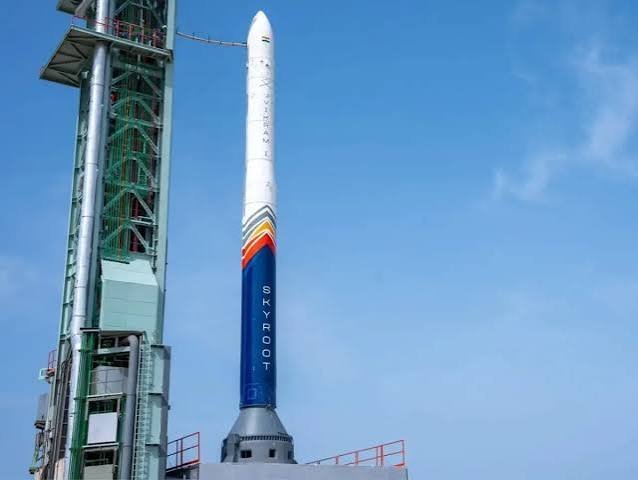
New Delhi, August 21,2026: Prime Minister Narendra Modi on Friday urged India’s private space industry to explore wider applications of space technologies across sectors, saying the country can become a magnet for global talent, companies and investment in the space sector.He made the remarks while interacting with CEOs and founders of 20 space startups at Seva Teerth today, as he called for a greater collaboration between space companies and sectors such as agriculture and environmental protection.The Prime Minister has encouraged space companies to look beyond their existing applications and focus on how their technologies can improve people’s lives. He suggested that companies working on space debris could collaborate with environmental organisations, while those developing space technologies for agriculture could work with agricultural universities and departments to help farmers make better-informed decisions and improve output.
He also called for the creation of an ecosystem where, “when the world thinks of space, it looks towards India”, saying the country’s space sector can act as a magnet to attract global talent, companies and investment.The CEOs and founders highlighted the rapid progress of India’s private space industry and said companies across the world were showing growing interest in adopting and leveraging technologies developed by India’s emerging space sector.They also said the opening of the space sector to private participation had created new opportunities for industry and expressed appreciation for the support received from government.The startups represented diverse areas including rockets and reusable semi-cryogenic launch vehicles, avionics, satellites, advanced propulsion systems, space and defence intelligence, space debris removal and AI-powered hyperlocal weather and climate intelligence.
PM Modi congratulated the space-sector leaders for taking the lead in a new area, saying the confidence shown by the industry had strengthened the vision behind opening the sector to private participation.He noted that many countries either cannot invest in the space sector or do not wish to do so, presenting India with an opportunity to strengthen its position in the global space sector.The Prime Minister also called for closer collaboration between space companies and Atal Tinkering Labs to create curiosity and interest in space among young children from an early age.The interaction included CEOs and founders of Skyroot Aerospace, Agnikul Cosmos, Pixxel, Dhruva Space, GalaxEye, PierSight, Bellatrix Aerospace, Digantara, SatSure, Suhora Technologies, Manastu Space, Astrobase, TakeMe2Space, VyomIC, Cosmoserve Space, OrbitAID Aerospace, SkyServe, Serendipity Space, Vassar Labs and mistEO.
Aug 20,2026: More than 200,000 people have been newly displaced across Sudan’s Kordofan region due to intensified fighting since late last year, the United Nations has said, as continued drone attacks target critical water and electricity infrastructure in the region’s biggest city, El Obeid.
The warning from the UN’s International Organization for Migration (IOM) came on Wednesday as seasonal flooding in nearby North Darfur state also compounded the displacement crisis.
“The warning signs are impossible to ignore,” said IOM Director General Amy Pope. “Across Sudan, families are fleeing violence, losing access to water, electricity and healthcare, and now facing the added burden of destructive floods.”
According to the IOM, displacement in the Sheikan district, which includes the city of El Obeid, has surged 25 percent over the past eight months.
In El Obeid, repeated fighting and drone attacks on the city’s main power transformer have knocked out electricity needed to pump water, run hospitals and keep phone lines working, the organisation said.
In Blue Nile state, some 78,000 people have also fled their homes, the IOM said, while in West Darfur, about 18,000 others were displaced in the first half of August.
Meanwhile in North Darfur, heavy rains in the Tawila area have damaged nearly 1,350 homes, displacing more than 1,000 families, the UN organisation added.
“Sudan is one of the world’s largest displacement crises,” Pope said. “The combined impact of conflict, infrastructure damage and flooding is stretching thousands of families beyond their limits.”
Since the war began in April 2023, an estimated 59,000 people have been killed, while 8.6 million people have been internally displaced. More than 4.2 million people have also fled to neighbouring countries.
Some 33.7 million people require humanitarian assistance, according to the UN.
Reporting from one of the main roads leading to El Obeid, Al Jazeera’s Almigdad Alruhaid described a route where drones belonging to the Rapid Support Forces (RSF) paramilitary have targeted army vehicles, oil tankers and cargo trucks.
The Sudanese army-held city has endured one of the longest sieges of the war, but the RSF “still maintains position south and west to the city and still continues attacking nearby villages”, Alruhaid said, adding that this was further worsening the humanitarian situation in the region.
El Obeid had a population of 750,000 people before the war, but authorities now estimate the population has reached 3.4 million, according to the Sudan Tribune.
Save the Children, a humanitarian group, said that nearly 39,000 children have arrived here in the first six months of this year.
Aug 16,2025: Russia carried out a wave of airstrikes on Ukraine overnight, killing two people at a steel plant, and Kyiv launched a heavy drone attack on the Moscow region that killed one person and set ablaze a warehouse used by Russia’s leading e-commerce retailer.
Romania, which borders Ukraine, said an F-18 fighter on a NATO air policing mission had shot down a drone that breached its airspace during the latest attacks. It did not specify the origin of the drone, which entered from Moldova, but a NATO spokesperson said it appeared to be Russian.
Russia struck Ukraine’s largest grain export port on the River Danube near the Romanian border last week after stepping up attacks on Ukraine in recent weeks. Ukraine has also intensified attacks on Russian targets including oil refineries, and both sides have struck commercial vessels in the Black Sea.
In the latest attacks since Russia’s invasion of Ukraine in February 2022, Russian forces struck Ukraine’s biggest steel plant overnight in the industrial city of Kryvyi Rih, President Volodymyr Zelenskiy’s home town.
At least two people were killed and 14 injured, Ukrainian officials said.
A Russian missile strike on Kyiv early on Sunday caused fires in at least two districts of the capital, Mayor Vitali Klitschko said. The city’s military administration said three people were injured.
Tymur Tkachenko, the Kyiv region’s governor, said three others, including a child, were injured in drone attacks across the region.
August 13, 2026: President Trump said Wednesday the U.S. has “total control” over the Strait of Hormuz, a claim Iran has disputed and that comes as ships are hesitant to pass through the waterway. “I THINK WE WILL KEEP IT,” he wrote on his Truth Social platform.
Iran has rejected President Donald Trump’s claim that the United States has “total control” over the Strait of Hormuz, saying the strategic waterway remains blocked and will not be reopened until Tehran’s conditions are accepted.
The Persian Gulf Strait Authority, in a post on X, said Trump’s claims and repeated statements by US officials that the Strait of Hormuz was no longer blocked did not change the situation.
The Iranian response came hours after Trump claimed on Truth Social that the US exercised “total control” over the Strait of Hormuz and “will keep it”. He described the US naval deployment in the region as a “WALL OF STEEL” and said, “there is nothing Iran can do about it”.
RIYADH/KARACHI/ANKARA, Aug 7,2026: Turkey, Saudi Arabia and Pakistan will sign a joint defence agreement in Mecca on Friday, sources with knowledge of the matter said, amid regional turmoil with Gulf states coming under fire from Iran after it was attacked by the U.S. and Israel.
While the pact further cements a burgeoning grouping of major Sunni Muslim powers allied with the United States, there was no immediate clarity on each state’s commitments or how it might affect the wider crisis in the Middle East.
Two regional sources with direct knowledge of the matter said the deal would be signed on Friday, which was later confirmed by a Turkish official. Another regional source said it was not clear whether the agreement would also be publicly announced on Friday.
The three nations share growing concerns over Middle East chaos and the role of revolutionary Shi’ite Iran and an increasingly assertive Israel, as the United States struggles to contain regional threats.
Turkey has NATO’s second-largest military. Saudi Arabia, the strongest Gulf state, is home to Islam’s holiest sites and one of the world’s top oil exporters, while Pakistan is the only nuclear-armed Muslim country.
Pakistani Prime Minister Shehbaz Sharif, accompanied by powerful army chief Asim Munir, arrived in Jeddah on Thursday and performed the Umrah pilgrimage in Mecca. Turkish President Tayyip Erdogan departed for Jeddah on Friday.
They will meet Saudi Crown Prince Mohammed bin Salman, whose country has been repeatedly struck by Iran, as well as by Tehran’s Houthi allies in Yemen and Shi’ite militia in Iraq, since the war began on February 28.
The conflict has also exposed Gulf states’ security vulnerabilities and disrupted shipping in the Strait of Hormuz, through which a fifth of global oil and liquefied natural gas transited prior to the war.
July 30,2026: A US man who is already serving 25 years in prison for attempting to kill Sir Salman Rushdie has been convicted of additional charges, including providing material support to a terrorist group.
Hadi Matar was convicted in a New York federal court on Wednesday of providing assistance to Hezbollah, the Lebanese armed faction which is designated as a terrorist group by the US, UK and many other countries.
Prosecutors argued that Matar had been motivated by a fatwa, a religious edict, issued by Iran’s religious leader in 1989 for Sir Salman’s death.
The award-winning author testified during the trial, describing the attack and crediting a firefighter with saving his life by providing medical care.
The jury convicted Matar of engaging in an act of transnational terrorism and providing material support to Hezbollah.
During the trial in the New York city of Buffalo, prosecutors argued that he had been motivated by a 2006 speech by the then-leader of Hezbollah, calling for the fatwa against Sir Salman to be enforced, and that he had plotted the attack for two years.
Defence attorneys argued that Matar’s attack had not been motivated by terrorism, and questioned the author about whether he should have expected a backlash to his controversial 1988 novel The Satanic Verses.
“I don’t believe the book is on trial,” Sir Salman responded. “Somebody else is on trial.”
Matar is already serving a 25-year sentence after being convicted of attempted murder by a state court in 2025. He could now face life in prison in the federal conviction.
Sir Salman’s novel, inspired by the life of the Muslim Prophet Muhammad, sparked outrage among some Muslims, who considered its content to be blasphemous.
He faced countless death threats and was forced into hiding for nine years after Iran’s religious leader issued the fatwa.
The British-Indian novelist later detailed his experience and long road to recovery in a memoir called Knife: Meditations After an Attempted Murder.
Last year, he released his first fiction in years, titled The Eleventh Hour.
July 29,2026: The Lok Sabha today passed the Public Examinations (Prevention of Unfair Means) Amendment Bill, 2026. The Bill seeks to amend the Public Examinations (Prevention of Unfair Means) Act, 2024. The legislation incorporates several significant provisions, including stringent penalties such as imprisonment for up to ten years, fines of up to ten crore rupees, and the seizure of the properties of convicted offenders. To ensure the expeditious disposal of cases, the legislation mandates that every State Government and Union Territory Administration establish Special Fast Track Courts for the day-to-day trial. It further provides that investigations into offences must be completed within two months from the date the information is recorded at the police station. The trials must be concluded within three months from the filing of the chargesheet.
Replying to the discussion on the bill, Minister of State for Personnel, Public Grievances and Pensions Dr Jitendra Singh said, the amendment in the bill has been brought to make the law more stringent and ensure speedy justice. He said, the new Bill is a reaffirmation of the government’s commitment to safeguard the welfare of students and youth. Dr Singh said, the incidents of paper leaks have taken place in various states ruled by different parties.
Hitting out at the Opposition for their conduct, Dr Singh said that when an important bill is being discussed, the Opposition is playing politics, instead of offering suggestions. He also criticised Leader of the Opposition Rahul Gandhi for using unparliamentary language, saying it is inappropriate and unfortunate. Replying to Mr Gandhi’s accusation against Union Home Minister Amit Shah, Dr Singh said that the government repeatedly clarified that no shots were fired and only tear gas was used. He said, since no shots were fired, the question of issuing an order does not arise as the authority to issue such an order rests with the magistrate, not the Minister.
Earlier, participating in the discussion, JDU MP Dileshwar Kamait expressed gratitude to Prime Minister Narendra Modi for bringing the Bill in Parliament, stating that it will ensure a brighter future for students while enhancing transparency in the education system. He said that the bill has been brought in the interest of students. Mr Kamait added that the new legislation provides for time-bound investigations and stringent punishment to ensure accountability and curb malpractices.
Opposing the bill, N K Premachandran of RSP said that the bill is inadequate to achieve the purpose stated in the bill. He alleged that the changes brought in the proposed bill are merely cosmetic.
Participating in the discussion, Leader of the Opposition in the Lok Sabha Rahul Gandhi said that the education system in the country has now become very expensive. He alleged that the money spent on conducting NEET-UG examination is more than the education budget of the country. Mr Gandhi said that the Students’ protest on the NEET issue was not violence or hatred but a deep expression of the youth, and all political parties must respect this expression.
New York, July 15 (UNI) India on Wednesday called for building resilient, transparent and diversified global supply chains for critical energy transition minerals, asserting that these resources should become “an engine for sustainable development, not another source of inequality.”
Addressing the United Nations High-Level Meeting on Critical Energy Transition Minerals, India’s Permanent Representative to the UN, Ambassador Harish Parvathaneni, said critical minerals are indispensable for the global clean energy transition and also present developing countries with an opportunity to accelerate industrialisation, generate quality employment and strengthen domestic manufacturing.
Parvathaneni said, “Critical energy transition minerals should become an engine for sustainable development, not another source of inequality.”
He added that India stands ready to work with all partners to build “resilient, transparent and diversified supply chains” that promote shared prosperity and ensure the benefits of the global energy transition are equitably distributed.
Welcoming the meeting, he thanked UN Secretary-General António Guterres for his leadership in advancing international dialogue on critical energy transition minerals.
“Critical minerals are indispensable for the clean energy transition, but for many developing countries they are also an opportunity to accelerate industrialization, create quality employment and strengthen domestic manufacturing,” Parvathaneni said.
He stressed that international cooperation should enable countries to achieve greater value addition and build resilient participation across global value chains.
Highlighting India’s efforts, the envoy said the country, one of the world’s fastest-growing renewable energy markets, is strengthening resilient and diversified critical mineral supply chains through the National Critical Mineral Mission, while Khanij Bidesh India Limited (KABIL) is forging strategic international partnerships.
He also noted India’s active participation in the UN Secretary-General’s Initiative on Critical Energy Transition Minerals, describing it as a reflection of the country’s commitment to practical international cooperation that supports a secure, sustainable and equitable energy transition.
Outlining India’s priorities for implementing global cooperation, Parvathaneni underscored three key principles.
“National ownership and permanent sovereignty over natural resources must remain the foundation of international cooperation,” he said.
He further called for partnerships that promote “investment, technology transfer, capacity-building and skills development on mutually agreed terms,” enabling developing countries to expand their processing, refining and manufacturing capabilities.
The ambassador also said the United Nations should strengthen technical cooperation, facilitate knowledge-sharing and leverage existing institutional arrangements while “avoiding duplication of mandates.”
Agartala, July 13,2026: The Tripura government intends to resume talks with its Mizoram counterpart to address their long-standing inter-state border dispute, and, as a preparation, officials from both states are scheduled to meet this week.
According to the report, the upcoming meeting is expected to precede a proposed dialogue between the two chief ministers. Sources said Tripura’s Chief Minister, Dr Manik Saha, has initiated a new round of discussions to address the issues concerning the 109-km border shared between the two states.
This initiative follows a conversation between Dr Saha and Mizoram’s Chief Minister, Lalduhoma, during 73rd plenary session of the North Eastern Council (NEC) held in Shillong last month. Dr Saha mentioned his proposal for discussions aimed at resolving the border issues through mutual consultation.
Tripura CM explained that he proposed senior officials from both states thoroughly discuss the matter before the highest policy-level meeting, as a foundation for subsequent discussions between the chief ministers.
The recent NEC plenary gathering was attended by union Home Minister Amit Shah, union Minister for Development of the North Eastern Region Jyotiraditya Scindia, and Minister of State Sukanta Mujumdar, along with governors and chief ministers of all eight north-eastern states, where the issue was flagged.
Tripura shares an 856-km international border with Bangladesh, which makes up nearly 84 percent of its total boundary, and also shares a 53-km inter-state border with Assam and a 109-km border with Mizoram.
The boundary between Tripura and Mizoram has been a source of contention for years, often leading to tensions when either state conducts development or construction work in disputed areas. One such incident occurred last May when an under-construction tourism facility in Phuldungsei village along the Tripura-Mizoram border was damaged by an explosion, prompting police from both states to visit the site and maintain peace.
Following the incident, Tripura’s Tourism and Transport Minister, Sushanta Chowdhury, led a review meeting in Jampui and resolved to reconstruct the damaged eco-tourism infrastructure. Residents have noted that both states claim Phuldungsei as their territory, marking it as one of the most sensitive sections along the inter-state border.
Officials have stated that the tourism project is being developed under the Centre’s Swadesh Darshan scheme with an estimated budget of Rs 3.12 crore.
Additional security forces were deployed in the area post-explosion, and the Tripura government subsequently addressed the issue with their counterparts in Mizoram.
In recent years, officials from North Tripura’s administration, Mizoram’s Mamit district administration, and the Survey of India have engaged in multiple discussions to pinpoint and resolve disputed sections, yet a conclusive resolution remains elusive.
Meanwhile, some organisations in Mizoram have continued to raise objections to construction activities by the Tripura government in the bordering localities.
July 11, 2026: India and New Zealand on Saturday elevated their ties to a strategic partnership and set a five-year target to double their annual bilateral trade in goods and services to Rs.35,000 crore by 2030 following talks between Prime Minister Narendra Modi and his Kiwi counterpart Christopher Luxon.
A joint statement noted that Mr. Modi and Mr. Luxon exchanged views on the Indo-Pacific, reaffirming their shared commitment to a free, open, and prosperous region. They also emphasised the importance of safeguarding sovereignty, territorial integrity, and the rules-based international order.
The visit came following the recent signing of the India–New Zealand Free Trade Agreement (FTA).
The two Prime Ministers agreed to work towards an aspirational goal of doubling bilateral two-way trade in goods and services to 7 billion New Zealand dollars or approximately RS.35,000 crore, by 2030.