Dhaka, Feb 13,2026:In Bangladesh’s first election since the fall of the Awami League, the Bangladesh Nationalist Party (BNP), led by Tarique Rahman, secured a landslide victory, winning approximately 210 seats out of 299 contested seats, according to the latest count.
However, its principal rival, an 11-party alliance led by Bangladesh Jamaat-e-Islami, has expressed dissatisfaction with the electoral process. In a statement released after the results were announced, Jamaat-e-Islami said it was “not satisfied with the process surrounding the election results.”
The Islamist party claimed that candidates from its 11-party electoral alliance had lost “narrowly and suspiciously” in several constituencies. It also criticised the Election Commission’s “reluctance” to publish voter turnout figures and alleged that elements within the interim administration had shown favouritism toward a major political party.
“All of this undoubtedly raises serious questions about the integrity of the results process,” the statement said.
According to officials in Dhaka, nearly 61 per cent of the registered voters took part in the elections, and more than 65 per cent voted in the referendum.
BNP Chairman Tarique RahmanTarique, son of former President Gen. Ziaur Rahman, won Dhaka-17 with 72,699 votes, defeating his nearest rival by a margin of 4,399 votes. He was also unofficially elected from Bogra-6, securing 216,284 votes.
The elections, held on Thursday, were Bangladesh’s first national vote since the 2024 student-led uprising that led to the resignation of long-time Prime Minister Sheikh Hasina. According to official figures, the BNP secured 210 seats, while Jamaat-e-Islami and its allies won 73 seats, and independents claimed 8 seats. A simple majority in the 300-member parliament requires 151 seats.
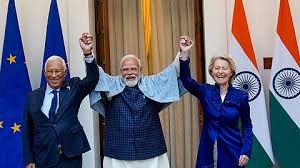
Prime Minister Narendra Modi congratulated Tarique Rahman on leading the Bangladesh Nationalist Party (BNP) to what he described as a “decisive victory” in Bangladesh’s parliamentary elections, reaffirming India’s commitment to supporting a democratic and progressive neighbour.
In a message posted on X, Modi conveyed his “warm congratulations” to Rahman, saying, “This victory shows the trust of the people of Bangladesh in your leadership.”
The Prime Minister underscored India’s continued support for Bangladesh’s democratic journey. “India will continue to stand in support of a democratic, progressive and inclusive Bangladesh,” he said, signaling New Delhi’s readiness to work closely with the new leadership in Dhaka.
Modi also expressed optimism about the future of bilateral ties. “I look forward to working with you to strengthen our multifaceted relations and advance our common development goals,” he added.
India and Bangladesh share deep historical, cultural, and economic links, with cooperation spanning trade, connectivity, energy, water resources, and security. Over the past decade, ties between the two countries have expanded significantly, particularly in cross-border infrastructure and regional connectivity initiatives.
The BNP, one of Bangladesh’s major political parties, has played a significant role in the country’s political landscape since the 1990s. Tarique Rahman, a senior party leader, has now emerged at the helm following the party’s electoral victory, marking a new phase in Bangladesh’s domestic politics.
Observers say the outcome of the parliamentary elections could shape the trajectory of India-Bangladesh relations, especially in areas such as trade integration, border management, and regional cooperation under multilateral frameworks.
The elections also included a referendum on the July National Charter, addressing limits on prime ministers’ terms, the creation of an upper house, and the restoration of the caretaker system to ensure free and fair polls.
President Asif Ali Zardari congratulated the Bangladesh Nationalist Party (BNP) and its leader, Tarique Rahman, on winning a landslide in Bangladesh’s parliamentary elections, giving them the mandate to form the next government. He also praised the people of Bangladesh for the smooth conduct of polls across 299 constituencies, with over 127 million registered voters participating.
Feb 8,2026: Voters in Japan are casting their ballots in a parliamentary election expected to deliver a resounding victory for Prime Minister Sanae Takaichi’s conservative coalition.
The snap vote on Sunday comes as Takaichi seeks a new mandate to push through an ambitious agenda, including increased defence spending and tougher immigration measures.
The coalition of Takaichi’s Liberal Democratic Party (LDP) and the Japan Innovation Party, known as Ishin, could win more than 300 of the 465 seats in the lower house of parliament, according to multiple opinion polls.
The figure would mark a substantial gain from the 233 it is defending.
The opposition, despite the formation of a new centrist alliance and a rising far-right, is seen as too splintered to be a real challenger.
Takaichi, 64, is Japan’s first female prime minister and took office in October after being selected as the LDP’s leader. The ultraconservative politician has pledged to “work, work, work”, and her style – seen as both playful and tough – has resonated with younger voters.
She has said she will step down if the LDP fails to win a majority.
Rising cost of living
Voters on Sunday will select lawmakers in 289 single-seat constituencies, with the remainder decided by proportional representation votes for parties. Polls close at 8pm local time (11:00 GMT), when broadcasters are expected to issue projections based on exit polls.
The rising cost of living has taken centre stage in the election.
The issue is voters’ main concern, with prices rising while real wage growth lags behind inflation, leaving households worse off. Japan also faces longstanding problems with sluggish economic growth. The economy expanded just 1.1 percent last year and is on track to grow by only 0.7 percent in 2026, according to the International Monetary Fund.
Takaichi has promised to suspend the 8 percent sales tax on food for two years to help households cope with rising prices.
Bengaluru, Feb 7,2026: India on Saturday signaled what the Central government described as a defining moment in its artificial intelligence and semiconductor journey, with the unveiling of a 2-nanometer chip design at Qualcomm highlighting the country’s growing role in advanced chip design alongside a rapid expansion of AI and data centre infrastructure.
Speaking at the Qualcomm event, union Minister for Electronics and Information Technology Ashwini Vaishnaw said India is steadily moving beyond its long-standing identity as a software services and back-end chip development hub towards higher-value semiconductor design and AI-driven technologies.
The 2-nanometer wafer unveiled by Qualcomm contains dies with around 20 billion transistors each and integrates CPU and GPU capabilities. The minister said such advanced chips are critical for enabling AI computing at the edge, including applications in cameras, networking equipment, industrial systems and automobiles.
He clarified that while semiconductor manufacturing remains a complex, long-term journey, India’s design capabilities have advanced significantly, with companies now undertaking end-to-end chip design work in the country, from product definition to silicon validation.
Linking semiconductor progress with AI infrastructure, Vaishnaw said India has already seen committed investments of around $70 billion in data centres, rising to nearly $90 billion when recent announcements are included.
He said industry discussions suggest that investments could rise substantially in the coming years as AI adoption accelerates, though he noted that such figures represent projections rather than firm commitments.
He added that the growth of data centres is beginning to create downstream opportunities, including interest in AI server manufacturing and advanced electronics production in India, supported by existing electronics manufacturing incentive schemes.
On AI compute capacity, the minister said India currently has around 10,000 GPUs available under common compute infrastructure and plans to add approximately 50,000 more in the near term as part of the next phase of the AI mission, with further decisions to be guided by inputs from an upcoming AI summit.
The minister attributed India’s progress to the talent pipeline being built under the Semicon India programme. Under Semicon India 1.0, semiconductor education and training has expanded across more than 300 universities and colleges, with students gaining exposure to chip design tools and validation processes through industry and government-supported facilities.
He said the union Budget’s announcement of Semicon India 2.0 will deepen this effort, with a sharper focus on advanced chip design, equipment and materials, system-level skills and the gradual expansion of fabrication and ATMP capabilities. As part of this roadmap, India will work systematically from current 28-nanometer fabrication capabilities towards more advanced nodes such as 7 nanometers over time.
On the impact of AI on the IT sector, the minister said artificial intelligence would permanently change the software industry, creating both disruption and new opportunities.
He emphasised the need for coordinated action by industry, academia and government to upskill and reskill the workforce for AI-based enterprise solutions.
Qualcomm executives said the company operates as a global organisation with intellectual property developed across multiple geographies, but confirmed that its India centres play an important role in advanced semiconductor design, including work on leading-node technologies.
Reiterating India’s approach to global technology engagement, the minister said the country remains committed to co-development, co-creation and respect for intellectual property, and aims to contribute meaningfully to global AI and semiconductor innovation.
February 3, 2026: The India-US trade agreement announced on February 3, 2026, is being viewed as a reset in bilateral economic relations, easing tariff-related uncertainty and improving visibility for exporters, manufacturers, and global investors. However, details on the extent of the commitments from India are still awaited.
The deal, which reduces US tariffs on Indian goods from 50 percent to 18 percent, removes what businesses had described as a lingering “tariff overhang” and is expected to strengthen India’s trade competitiveness at a time of fragile global demand.
Business executives, economists, and market stakeholders say the move restores predictability for cross-border commerce and could unlock delayed investment decisions across manufacturing and supply-chain-linked sectors.
India’s Prime Minister Narendra Modi hailed the agreement as a reaffirmation of robust bilateral ties, while US President Donald Trump highlighted commitments from India to increase purchases of American energy, technology, agricultural goods, and manufacturing inputs as part of broader efforts to address trade imbalances and strengthen economic integration.
At the center of the India-US trade agreement is a notable rollback of 2025 US tariffs on Indian exports, a step that analysts say will directly support margin stability for exporters while improving planning certainty for multinational firms operating production bases in India.
India’s Union Commerce and Industry Minister Piyush Goyal described the trade deal as a catalyst for “unprecedented opportunities” for farmers, medium-small and micro enterprises (MSMEs), entrepreneurs, and skilled workers, positioning India to export competitive products globally while attracting technology transfers that could turbo-charge domestic manufacturing and innovation.
According to Goyal’s remarks reported by PTI and other major media outlets, the agreement is expected to:
Expand market access for Indian agricultural products and processed goods.
Strengthen the Make in India and Design in India initiatives by expanding global footprints.
Facilitate technology collaboration with US partners in key sectors.
Create jobs and scale exports in manufacturing, services, and technology segments.
Beyond commercial flows, the agreement also carries geopolitical significance. Latest reports note that India has agreed to curb Russian oil purchases as part of the broader negotiations, potentially signaling a gradual shift toward deeper economic alignment with the US.
Details on the exact scale of India’s reduced Russian oil imports and any corresponding increase in US agricultural exports are still awaited, but analysts see the agreement as strengthening India’s strategic positioning within global supply chains.
Potential upside for GDP growth, markets, and manufacturing
From a macroeconomic perspective, the tariff reduction is expected to support India’s GDP growth trajectory while providing a tailwind to equity markets, particularly export-facing and manufacturing-linked stocks.
Market watchers point to possible spillover benefits across electronics, industrial goods, and downstream services, especially as firms reassess sourcing strategies amid ongoing geopolitical fragmentation.
For lenders, improved trade conditions could translate into healthier corporate balance sheets, stronger demand for working capital, and increased appetite for long-term project financing, particularly in sectors aligned with India’s production-linked incentive (PLI) programs and infrastructure expansion drive.
Though detailed lists of tariff schedules and market access commitments are still being clarified by the central government authorities, exporters, including rice, marine products, textiles, and engineering goods firms, have welcomed the relief from punitive tariff regimes and anticipate renewed demand from the US market.
Analysts see the US pact complementing India’s wider trade strategy, which also includes diversification through FTAs with other partners – most recently, New Zealand and the EU. India has also signed an economic partnership agreement with Oman to grant zero-duty access on most goods, boosting exports across engineering, leather, textiles, and pharmaceuticals.
India was among the first countries to open trade discussions with the Trump administration, but negotiations progressed unevenly through 2025 amid speculation over whether a deal would materialize.
For multinational firms with India-based manufacturing or sourcing operations, the deal delivers three immediate advantages:
Reduced tariff risk, improving margin visibility on US-bound exports
Greater policy certainty, supporting medium-term capacity and location planning
Improved investor sentiment, which could lower financing costs and speed up project approvals
India-US trade deal: Sectoral impacts and industry views
While the official deal’s specifics on agricultural tariff liberalization are still emerging, US agricultural officials have highlighted the potential for increased American farm exports to India, which Washington believes will narrow the US agricultural trade deficit and inject fresh demand into rural markets.
Domestic industry bodies in India have also noted potential new openings for products like rice and marine exports, with exporters welcoming tariff relief as a competitive advantage.
Manufacturing and MSMEs
Export-oriented industries such as engineering, electronics, textiles, and leather goods are expected to benefit from reduced tariff pressure, enabling Indian producers to better compete with regional rivals like Vietnam, Bangladesh, and Malaysia.
Trade associations such as EEPC India have already hailed the deal as a boost to engineering exports, while MSME groups anticipate stronger integration into cross-border supply chains.
Financial markets and investment sentiment
Financial markets reacted positively to the announcement, with benchmark indices rising and risk sentiment improving as trade uncertainty eased. Macroeconomic analysts see the agreement as potentially supporting GDP growth by lifting export momentum and attracting foreign direct investment (FDI) into manufacturing and technology sectors.
What’s next and implementation challenges
While the tariff truce is being celebrated, parties on both sides acknowledge that the full implementation schedule, product lists, and timelines remain to be formalized through executive orders, cabinet approvals, and regulatory mechanisms.
Industry experts note the necessity for clarity on tariff phase-downs, rules of origin, and non-tariff measures to fully unlock the deal’s potential. Continued consultations between Indian trade negotiators and US counterparts are expected in the coming months to firm up operational details.
Key questions and business implications of the India-US tariff reset
The introduction of an 18 percent reciprocal tariff provides partial relief, particularly for sectors such as apparel and gems and jewelry, which were among the most affected by higher US duty rates. However, the benefit is relatively limited when viewed in a regional context. Several of India’s neighboring countries and key Asian competitors continue to enjoy preferential market access under the US Generalized System of Preferences (GSP), typically amounting to duty concessions of around 5 percent. The US withdrew India’s GSP status in 2019 during President Trump’s first term, and Indian exporters had therefore anticipated a lower reciprocal tariff closer to 15 percent to restore competitive parity.
In a social media statement, Trump indicated that Modi had committed to significantly expanding purchases of US-origin goods, including energy, technology, agriculture, coal and other products, with the total value exceeding US$500 billion. India’s Ministry of External Affairs (MEA) has not confirmed whether such a commitment has been formally made. Given the magnitude of the figure, any such procurement would likely be phased over several years rather than executed as a near-term obligation.
Recent developments around Iran-related sanctions reflect regulatory tightening rather than a policy reversal by New Delhi. On February 4, 2025, the US administration issued National Security Presidential Memorandum-2 (NSPM-2), directing the US Secretary of State to modify or rescind sanctions waivers that could provide Iran with economic or financial relief, including those linked to the Chabahar port project. Subsequently, on September 16, 2025, the US State Department revoked the 2018 waiver, effective September 29, 2025.
India has invested nearly US$120 million in equipment for Chabahar, a project that has played a critical role in enabling humanitarian and emergency assistance to Afghanistan. Following representations by New Delhi, the US Department of the Treasury issued a letter on October 28, 2025, confirming that Chabahar-related activities will not be subject to US sanctions until April 26, 2026.
The Government of India remains actively engaged with the US State Department and Treasury to operationalize this arrangement. Taken together, these developments point to a more constrained and negotiated operating environment for India’s regional connectivity strategy, rather than any capitulation to US sanctions pressure.
Export-oriented sectors such as engineering goods, electronics, textiles, leather, agriculture, and marine products are likely to see the most immediate gains. Reduced tariffs improve price competitiveness in the US market, particularly against Asian peers like Vietnam, Bangladesh, and Malaysia.
For global firms sourcing or manufacturing in India, the agreement reduces tariff risk on US-bound exports, improves margin visibility, and strengthens the case for expanding India-based production and supply chains.
While the tariff reduction restores near-term predictability, detailed tariff schedules, product coverage, and timelines are still awaited. Full policy certainty will depend on the finalization of operational and regulatory details.
7. How could the agreement affect India’s GDP growth and employment?
By supporting exports, manufacturing output, and investment sentiment, the deal is expected to provide a positive impulse to GDP growth and job creation, particularly in manufacturing, logistics, and export-linked services.
The US deal complements India’s wider diversification strategy, which includes recent trade agreements with New Zealand, the EU, and Oman, aimed at expanding export markets and reducing dependence on any single geography.
New Delhi, Feb 1,2026: Finance Minister Nirmala Sitharaman presented the union Budget for 2026-27 in the Lok Sabha on Sunday, emphasising India’s sustained economic growth and resilience amid global uncertainties.
Highlighting a strong macroeconomic stability with a growth rate of around 7 pc, she said, “The Modi government has decisively chosen action over ambivalence, delivering reforms that have improved lives and reduced poverty.”
The Budget focuses on balancing ambition with inclusion, aiming to transform aspiration into achievement. Sitharaman noted, “This is a Yuva Shakti-driven Budget inspired by three duties: to accelerate economic growth, build resilience to global volatility, and ensure inclusive development.”
Key reforms announced include significant steps to build domestic manufacturing capacity, enhance energy security, and cut critical import dependency. The government proposes to boost manufacturing in sectors such as biopharma, semiconductors, textiles, and infrastructure, with dedicated funds like Rs 100 billion for Biopharma Shakti and an expanded Rs 400 billion outlay for electronics manufacturing.
A major thrust is on supporting MSMEs through a three-pronged approach, including a proposed Rs 100 billion SME growth fund and measures to improve liquidity and compliance via TReDS and GeM integration. Infrastructure development will be scaled up with a capital expenditure target of Rs 12.2 trillion and initiatives like 20 new waterways and coastal shipping schemes aimed at boosting trade and connectivity.
On the financial front, the Budget aims to strengthen the banking sector with a new high-level committee for banking reforms and restructuring of key public NBFCs. Tax reforms include the rollout of the new Income Tax Act from April 1, reduced TCS rates for education and medical expenses, and rationalization of prosecution under the Income Tax Act. Notably, tax holidays are extended till 2047 for cloud services from Indian data centers, and safe harbor provisions are enhanced for IT services.
Sitharaman stressed the importance of integrating India with global markets, stating, “India must continue to take confident steps to ensure long-term economic stability while fostering innovation through cutting-edge technology and AI as force multipliers.”
The fiscal deficit for FY27 is pegged at 4.3 per cent of GDP with a debt-to-GDP ratio expected to decline to 55.6 per cent, underscoring the government’s commitment to fiscal prudence. Tax devolution to states continues at 41 per cent, with Rs 1.4 trillion allocated as grants.
The Budget also prioritizes social sectors and employment generation, proposing schemes for medical tourism hubs, upgrading allied health skills, promoting sports goods manufacturing, and supporting vulnerable populations, including women entrepreneurs and the differently-abled.
Finance Minister Sitharaman reaffirmed the government’s reform momentum: “Over 350 reforms have been rolled out since August 15, and the reform express is well on its way to boosting growth, employment, and production across the country.”
Jan 26,2026: For the year 2026, the President has approved conferment of 131 Padma Awards including 2 duo cases (in a duo case, the Award is counted as one) as per list below. The list comprises 5 Padma Vibhushan, 13 Padma Bhushan and 113 Padma Shri Awards. 19 of the awardees are women and the list also includes six persons from the category of Foreigners / NRI / PIO / OCI and 16 Posthumous awardees.
Padma Vibhushan (5)
Name Field State / Country
Shri Dharmendra Singh Deol (Posthumous) Art Maharashtra
Shri K T Thomas Public Affairs Kerala
Ms. N Rajam Art Uttar Pradesh
Shri P Narayanan Literature and Education Kerala
Shri V S Achuthanandhan (Posthumous) Public Affairs Kerala
Padma Bhushan (13)
Name Field State / Country
Ms. Alka Yagnik Art Maharashtra
Shri Bhagat Singh Koshyari Public Affairs Uttarakhand
Shri Kallipatti Ramasamy Palaniswamy Medicine Tamil Nadu
Shri Mammootty Art Kerala
Dr. Nori Dattatreyudu Medicine United States of America
Shri Piyush Pandey (Posthumous) Art Maharashtra
Shri S K M Maeilanandhan Social Work Tamil Nadu
Shri Shatavadhani R Ganesh Art Karnataka
Shri Shibu Soren (Posthumous) Public Affairs Jharkhand
Shri Uday Kotak Trade and Industry Maharashtra
Shri V K Malhotra (Posthumous) Public Affairs Delhi
Shri Vellappally Natesan Public Affairs Kerala
Shri Vijay Amritraj Sports United States of America
Padma Shri (113)
Name Field State / Country
Shri A E Muthunayagam Science and Engineering Kerala
Shri Anil Kumar Rastogi Art Uttar Pradesh
Shri Anke Gowda M. Social Work Karnataka
Ms. Armida Fernandez Medicine Maharashtra
Shri Arvind Vaidya Art Gujarat
Shri Ashok Khade Trade and Industry Maharashtra
Shri Ashok Kumar Singh Science and Engineering Uttar Pradesh
Shri Asok Kumar Haldar Literature and Education West Bengal
Shri Baldev Singh Sports Punjab
Shri Bhagwandas Raikwar Sports Madhya Pradesh
Shri Bharat Singh Bharti Art Bihar
Shri Bhiklya Ladakya Dhinda Art Maharashtra
Shri Bishwa Bandhu (Posthumous) Art Bihar
Shri Brij Lal Bhat Social Work Jammu and Kashmir
Shri Buddha Rashmi Mani Others – Archaeology Uttar Pradesh
Dr. Budhri Tati Social Work Chhattisgarh
Shri Chandramouli Gaddamanugu Science and Engineering Telangana
Shri Charan Hembram Literature and Education Odisha
Shri Chiranji Lal Yadav Art Uttar Pradesh
Ms. Deepika Reddy Art Telangana
Shri Dharmiklal Chunilal Pandya Art Gujarat
Shri Gadde Babu Rajendra Prasad Art Andhra Pradesh
Shri Gafruddin Mewati Jogi Art Rajasthan
Shri Gambir Singh Yonzone Literature and Education West Bengal
Shri Garimella Balakrishna Prasad (Posthumous) Art Andhra Pradesh
Ms. Gayatri Balasubramanian and Ms. Ranjani Balasubramanian (Duo)* Art Tamil Nadu
Shri Gopal Ji Trivedi Science and Engineering Bihar
Shri Guduru Venkat Rao Medicine Telangana
Shri H V Hande Medicine Tamil Nadu
Shri Hally War Social Work Meghalaya
Shri Hari Madhab Mukhopadhyay (Posthumous) Art West Bengal
Shri Haricharan Saikia Art Assam
Ms. Harmanpreet Kaur Bhullar Sports Punjab
Shri Inderjit Singh Sidhu Social Work Chandigarh
Shri Janardan Bapurao Bothe Social Work Maharashtra
Shri Jogesh Deuri Others – Agriculture Assam
Shri Juzer Vasi Science and Engineering Maharashtra
Shri Jyotish Debnath Art West Bengal
Shri K Pajanivel Sports Puducherry
Shri K Ramasamy Science and Engineering Tamil Nadu
Shri K Vijay Kumar Civil Service Tamil Nadu
Shri Kabindra Purkayastha (Posthumous) Public Affairs Assam
Shri Kailash Chandra Pant Literature and Education Madhya Pradesh
Ms. Kalamandalam Vimala Menon Art Kerala
Shri Kewal Krishan Thakral Medicine Uttar Pradesh
Shri Khem Raj Sundriyal Art Haryana
Ms. Kollakal Devaki Amma G Social Work Kerala
Shri Krishnamurty Balasubramanian Science and Engineering Telangana
Shri Kumar Bose Art West Bengal
Shri Kumarasamy Thangaraj Science and Engineering Telangana
Prof. (Dr.) Lars-Christian Koch Art Germany
Ms. Liudmila Viktorovna Khokhlova Literature and Education Russia
Shri Madhavan Ranganathan Art Maharashtra
Shri Maganti Murali Mohan Art Andhra Pradesh
Shri Mahendra Kumar Mishra Literature and Education Odisha
Shri Mahendra Nath Roy Literature and Education West Bengal
Shri Mamidala Jagadesh Kumar Literature and Education Delhi
Ms. Mangala Kapoor Literature and Education Uttar Pradesh
Shri Mir Hajibhai Kasambhai Art Gujarat
Shri Mohan Nagar Social Work Madhya Pradesh
Shri Narayan Vyas Others – Archaeology Madhya Pradesh
Shri Naresh Chandra Dev Varma Literature and Education Tripura
Shri Nilesh Vinodchandra Mandlewala Social Work Gujarat
Shri Nuruddin Ahmed Art Assam
Shri Othuvaar Thiruthani Swaminathan Art Tamil Nadu
Dr. Padma Gurmet Medicine Ladakh
Shri Palkonda Vijay Anand Reddy Medicine Telangana
Ms. Pokhila Lekthepi Art Assam
Dr. Prabhakar Basavprabhu Kore Literature and Education Karnataka
Shri Prateek Sharma Medicine United States of America
Shri Praveen Kumar Sports Uttar Pradesh
Shri Prem Lal Gautam Science and Engineering Himachal Pradesh
Shri Prosenjit Chatterjee Art West Bengal
Dr. Punniamurthy Natesan Medicine Tamil Nadu
Shri R Krishnan (Posthumous) Art Tamil Nadu
Shri R V S Mani Civil Service Delhi
Shri Rabilal Tudu Literature and Education West Bengal
Shri Raghupat Singh (Posthumous) Others – Agriculture Uttar Pradesh
Shri Raghuveer Tukaram Khedkar Art Maharashtra
Shri Rajastapathi Kaliappa Goundar Art Tamil Nadu
Shri Rajendra Prasad Medicine Uttar Pradesh
Shri Rama Reddy Mamidi (Posthumous) Others – Animal Husbandry Telangana
Shri Ramamurthy Sreedher Others – Radio Broadcasting Delhi
Shri Ramchandra Godbole and Ms. Suneeta Godbole (Duo)* Medicine Chhattisgarh
Shri Ratilal Borisagar Literature and Education Gujarat
Shri Rohit Sharma Sports Maharashtra
Ms. S G Susheelamma Social Work Karnataka
Shri Sangyusang S Pongener Art Nagaland
Sant Niranjan Dass Others – Spiritualism Punjab
Shri Sarat Kumar Patra Art Odisha
Shri Saroj Mandal Medicine West Bengal
Shri Satish Shah (Posthumous) Art Maharashtra
Shri Satyanarayan Nuwal Trade and Industry Maharashtra
Ms. Savita Punia Sports Haryana
Prof. Shafi Shauq Literature and Education Jammu and Kashmir
Shri Shashi Shekhar Vempati Literature and Education Karnataka
Shri Shrirang Devaba Lad Others – Agriculture Maharashtra
Ms. Shubha Venkatesha Iyengar Science and Engineering Karnataka
Shri Shyam Sundar Medicine Uttar Pradesh
Shri Simanchal Patro Art Odisha
Ms. Sivasankari Literature and Education Tamil Nadu
Dr. Suresh Hanagavadi Medicine Karnataka
Swami Brahmdev Ji Maharaj Social Work Rajasthan
Shri T T Jagannathan (Posthumous) Trade and Industry Karnataka
Shri Taga Ram Bheel Art Rajasthan
Shri Tarun Bhattacharya Art West Bengal
Shri Techi Gubin Social Work Arunachal Pradesh
Shri Thiruvaarur Bakthavathsalam Art Tamil Nadu
Ms. Tripti Mukherjee Art West Bengal
Shri Veezhinathan Kamakoti Science and Engineering Tamil Nadu
Shri Vempaty Kutumba Sastry Literature and Education Andhra Pradesh
Shri Vladimer Mestvirishvili (Posthumous) Sports Georgia
Shri Yumnam Jatra Singh (Posthumous) Art Manipur
SEOUL, Jan 21,2026: A South Korean court jailed former Prime Minister Han Duck-soo for 23 years on Wednesday, on charges that included insurrection relating to ex-President Yoon Suk Yeol’s declaration of martial law in December 2024.
Han, 76, is the first former cabinet minister to be handed a ruling by a court on criminal charges directly related to martial law, which legal experts have said could prove a bellwether for other trials.
The Seoul Central District Court found Han guilty because he was instrumental in setting up the outward appearance of a cabinet meeting that facilitated the declaration, a judge said, a move he described as a “top-down insurrection”.
Han also discussed plans to block the function of major institutions such as parliament as part of the insurrection, the judge added.
“The defendant was a prime minister who had been indirectly given democratic legitimacy and responsibility … Nevertheless, the defendant chose to turn a blind eye … and participate as a member of the December 3 insurrection,” the judge said.
“As a result, South Korea was in danger of returning to the dark past when the basic rights and liberal democratic order of the people were violated, potentially preventing them from escaping … dictatorship for a long time.”
The court found Han guilty of “engaging in (the) key action of insurrection”, as well as on related charges of perjury and falsifying an official document.
“I will humbly follow the judge’s decision,” Han, clad in a suit and green tie, said after the ruling.
He had denied wrongdoing on all charges except perjury, saying in November that while he regretted not being able to stop Yoon from declaring martial law, he “never agreed to it or tried to help”.
In an unusual instance in South Korean court proceedings, the 23-year term exceeded a sentence of 15 years sought by prosecutors in November.
Han was detained by the court immediately after the ruling, which can be appealed. Han’s lawyer said it would be taken to the Supreme Court.
HELD SENIOR POSTS UNDER FIVE PRESIDENTS
Han is an experienced technocrat who served in senior posts under five presidents. He became acting president after Yoon was impeached, before his own impeachment on accusations of having aided Yoon in the martial law declaration.
The Constitutional Court overturned Han’s impeachment, restoring his powers to serve as leader before he resigned from the post to run in a snap election in June. He ended his bid for the presidency following rifts among conservatives.
“I don’t know whether this elderly man (Han)… meant to devote himself to the people of South Korea in his own way, but the outcome wasn’t good,” said another commuter, 79-year-old Kim In-sik.
Yoon, who faces eight separate trials, was handed a five-year jail term last week for charges that included obstructing attempts to arrest him following martial law. He has appealed.
Yoon faces another ruling on February 19 on the most serious charge of “masterminding an insurrection”.
Prosecutors have sought the death penalty in that case, though South Korea has had no execution since 1997.
Thiruvananthapuram, Jan 21,2026: Some of the most consequential cyber operations underway today do not look like attacks at all. They cause no immediate disruption, trigger no alarms and may remain invisible for years.
Their strategic value lies not in what they do at the moment, but in what they quietly make possible. Modern cyber conflict, security analysts say, is increasingly prepared long before it is ever revealed.
“This reality came sharply into focus with the widely reported Lebanon pager incident. Communication devices that appeared simple, benign and technologically unremarkable were later activated in a coordinated manner, causing physical harm without any indication of real-time hacking,” K.S. Manoj, a cyber-physical systems security expert associated with Intelegrid said.
Subsequent international reporting suggested that the decisive compromise may have taken place much earlier, during the design, manufacture or distribution of the devices.
For analysts, the episode illustrated a growing shift in how conflict unfolds: modern attacks may be embedded and positioned well before they are triggered.
Security experts describe this approach as pre-positioned cyber operations, a strategy centred on the covert establishment of persistent or dormant access within systems, devices or infrastructure, without immediate activation.
Unlike conventional cyber attacks that seek instant impact, pre-positioning focuses on long dwell times, minimal forensic traces and activation only when strategic or geopolitical conditions warrant it. In many cases, such access is never used. Its value lies in the option it provides rather than in execution itself.
The Lebanon pager case is also significant because it demonstrates how cyber operations are expanding beyond digital networks into supply chains and physical objects.
By compromising systems upstream, before a device is ever deployed, attackers can bypass traditional cyber defences altogether.
Analysts note that this means systems do not need to be online to carry risk, cyber actions and physical effects can be separated by long time gaps, and trust in manufacturing and procurement has become a critical vulnerability.
These dynamics blur the boundary between cyber and physical security and complicate detection, attribution and response.
India offers a useful lens through which to examine these trends. As a large and rapidly digitising economy with complex infrastructure and deep reliance on global supply chains, it reflects challenges increasingly faced by many countries.
Investigations following the 2020 Mumbai power disruption identified advanced malware linked to grid-related systems, with indications that elements of the intrusion may have occurred months earlier.
While no definitive attribution of the outage to cyber sabotage was established, analysts observed that the timeline was consistent with pre-positioned access rather than a sudden intrusion.
A similar pattern emerged in 2019, when malware was detected on systems associated with the Kudankulam nuclear facility.
The incident showed evidence of access without activation. In nuclear and other high-consequence environments, analysts note that restraint itself can be strategic, as access may carry value even if it is never exercised.
The Mumbai power disruption occurred during a period of heightened India–China military tensions following the Galwan Valley clash. Analysts caution that coincidence in timing does not establish causation, particularly when infiltration appears to predate visible events.
The sequence nonetheless illustrates why timing alone has become an unreliable indicator of cyber intent in an era defined by dormant, long-term access.
Recent launch vehicle anomalies in India have also prompted discussion among security and engineering experts.
While there is no public evidence linking such incidents to cyber sabotage, specialists argue that failure analysis for high-consequence aerospace systems increasingly needs to incorporate cyber-physical and supply-chain risk models alongside conventional engineering and procedural factors.
In parallel, India has experienced a rise in reports of GPS spoofing and navigation interference affecting aviation, maritime operations and unmanned systems.
Such incidents, widely documented in other regions, are increasingly viewed as part of a broader category of geographically bounded or “geofenced” cyber-electronic activity, in which effects are limited to specific locations and time windows.
Following post-Sindoor security operations, analysts note that such selective cyber and electronic interference has come under closer scrutiny, even as attribution remains difficult and public evidence limited.
Taken together, these developments reinforce a central concern among security experts: modern cyber risk is no longer defined solely by visible attacks or system failures, but by silent access, localised interference and capabilities that may remain dormant or be activated selectively, complicating detection, attribution and response.
India’s experience mirrors developments elsewhere. Authorities in the United States have acknowledged that foreign actors maintained long-term access to parts of critical infrastructure without causing outages. In Ukraine, years of dormant cyber access preceded cyber-physical attacks once conflict escalated.
Security assessments across regions indicate that state-aligned cyber groups from multiple countries, including China and North Korea, have demonstrated advanced capabilities in stealthy infiltration, long-term persistence and supply-chain compromise.
Analysts note that patience and restraint, rather than frequent disruption, are increasingly defining features of such operations.
At the same time, experts caution against over-attribution. Aerospace failures, aviation incidents and industrial accidents are complex events with multiple potential causes, and cyber sabotage should not be assumed without evidence.
The deeper challenge lies in limited visibility, namely the difficulty of knowing what access may already exist, inactive and undetected.
Pre-positioned cyber operations are forcing a rethink of security itself. Traditional defences such as firewalls and monitoring systems remain necessary but are no longer sufficient on their own.
Increasingly, resilience depends on deeper supply-chain scrutiny, cyber-informed engineering and independent investigation of cyber-physical incidents. In this environment, deterrence is shaped as much by what remains silent as by what becomes visible.
The Lebanon pager incident ultimately serves as a reminder that modern conflict may be shaped long before any attack is perceived. As cyber operations extend into devices, supply chains and physical systems, the central security question is no longer simply who attacked, but what capabilities may already be embedded, and whether they can be detected before they are ever used.
Jan 19,2026: European Commission President Ursula von der Leyen said she had discussed Greenland and US actions with NATO Secretary-General Mark Rutte, French President Emmanuel Macron, Italian Prime Minister Giorgia Meloni, UK Prime Minister Keir Starmer, and German Chancellor Friedrich Merz.
“I spoke to Mark Rutte, Emmanuel Macron, Keir Starmer, Friedrich Merz, and Giorgia Meloni. Together we stand firm in our commitment to uphold the sovereignty of Greenland and the Kingdom of Denmark,” von der Leyen said in a post on X.
She emphasised that the European union will always defend its strategic economic and security interests. “We will face these challenges to our European solidarity with steadiness and resolve,” she added.
The comments come as NATO Secretary-General Mark Rutte confirmed he had spoken with President Donald Trump on January 18 regarding the security situation in Greenland and the Arctic.
“Spoke with Trump regarding the security situation in Greenland and the Arctic. We will continue working on this, and I look forward to seeing him in Davos later this week,” Rutte wrote on X.
The discussions follow Trump’s announcement that he would impose a 10 percent tariff on Denmark, Finland, France, Germany, the Netherlands, Norway, Sweden, and the United Kingdom. The tariffs were triggered after these countries deployed troops to Greenland’s capital, Nuuk, in a military exercise called “Operation Arctic Endurance.”
The NATO nations said the deployment was aimed at supporting Greenland’s autonomy, following reports that the Trump administration had expressed interest in annexing the Arctic island for “national security purposes.”
In response to their pushback, Trump stated that the tariff would take effect on February 1 and rise to 25 percent on June 1, remaining in place “until a Deal is reached for the Complete and Total purchase of Greenland.”
European leaders strongly condemned the planned tariffs, warning that such measures risked undermining transatlantic relations and could trigger a “dangerous downward spiral.” They stressed that the Danish-led exercise “responds to this necessity and poses no threat to anyone.”
US Treasury Secretary Scott Bessent told a television channel that European leaders would eventually “come around” and recognize the need to remain “under the U.S. security umbrella.”
Greenland, part of the Kingdom of Denmark, has been at the center of tension after Trump has repeatedly expressed interest in acquiring the resource-rich Arctic island, a stance that has alarmed European allies and stirred tensions within NATO.
Danish and Greenlandic authorities have insisted that their territorial integrity must be respected.
As the tension escalated, Denmark’s Foreign Minister Lars Løkke Rasmussen said there is a “fundamental disagreement” with the United States over Greenland following talks at the White House.
Rasmussen described Wednesday’s meeting with US Vice President JD Vance and Secretary of State Marco Rubio as “frank but constructive,” but added that President Trump’s insistence on “conquering” Greenland was “totally unacceptable.”
“We made it very, very clear that this is not in the interest of Denmark,” he said.
The hour-long meeting involving the US, Denmark, and Greenland did not produce a major breakthrough. However, all sides agreed to establish a high-level working group to discuss the future of the autonomous Danish territory.
Moreover, Rasmussen highlighted that there were “red lines” the US could not cross.
“It’s productive to start discussions at a high level,” Rasmussen said.
The Danish foreign minister also acknowledged that there is “an element of truth” in Trump’s argument that Arctic security should be strengthened to counter Russian and Chinese interests. However, he refuted the president’s claims about Russian and Chinese warships operating near Greenland, calling them “not true.”
Bengaluru, Jan 13,2026: Karnataka Home Minister G Parameshwara on Tuesday said the state government stands ready to provide any clarification sought by Governor Thaawarchand Gehlot regarding the Karnataka Hate Speech and Hate Crimes (Prevention) Bill, 2025, which is currently pending gubernatorial assent.
Parameshwara told reporters that the government has already furnished explanations on the Bill and would respond to further queries if required by the Raj Bhavan.
The controversial legislation, passed during the winter session of the state legislature in Belagavi in December 2025, seeks to criminalise hate speech and related offences with provisions for imprisonment and fines.
Under its proposed framework, hate speech and hate crimes would be treated as non‑bailable offences, punishable by imprisonment and penalties for first‑time and repeat offenders.
Opposition parties, including the Bharatiya Janata Party (BJP) and Janata Dal (Secular) (JD(S)), have urged Governor Gehlot to withhold assent to the Bill.
BJP leaders have described the Bill as “draconian” and a threat to free speech, submitting memoranda that it could be misused against political opponents and media organisations, and have even called for the Governor to reserve the Bill for Presidential consideration under the Constitution.
The JD(S) also petitioned the Governor to withhold approval, arguing the legislation unjustifiably restricts freedom of expression.
Karnataka Chief Minister Siddaramaiah recently said that the Governor has neither cleared nor rejected the hate speech legislation, leaving it under consideration while other Bills from the winter session have received assent or been returned for clarification. Siddaramaiah indicated the government may brief the Governor further on the Bill’s provisions.
The Bill has been the subject of sharp debate since its introduction, with proponents asserting it is necessary to curb inflammatory and divisive speech, while critics contend its broad definitions risk chilling legitimate expression.
January 13,2026: The Madhya Pradesh government on Tuesday formally launched its paperless e-Cabinet system, with Chief Minister Mohan Yadav and ministers attending the Cabinet meeting carrying their respective tablets held at the state secretariat in Bhopal.During the previous cabinet meeting held on January 6, tablets were provided to all the ministers with the objective of initiating the e-Cabinet process in the state. Additionally, a detailed presentation of the e-tablet application was also showcased before the Council of Ministers.With this initiative, cabinet agendas and related documents will be shared digitally with ministers through a dedicated tablet application.CM Yadav said the initiative started to promote e-governance in the state, adding that it would help in adopting a paperless work process, saving time and ensuring transparency in government functioning.”Our Prime Minister promotes technology and I am proud that our Chief Minister Mohan Yadav started the e-cabinet initiative. Now, our agenda for the meeting is shared in this tab device. It is a good initiative,” said Kailash Vijayvargiya, Urban Development and Housing Minister. Water resources Minister Tulsi Silwat has said that it is an era of science and technology and in the same episode, e-cabinet is a good initiative taken by the Mohan Yadav government. “We are happy that now we have entered into the digitalised era of the 21st century. With the e-cabinet initiative, paperless work will take place and it will also simplify our work. It is a commendable initiative,” Minister Krishna Gaur said. Panchayat and Rural Development Minister Prahald Patel said that the government of India started the initiative long ago and it was a commendable effort of the Madhya Pradesh government to hold a paperless cabinet. He highlighted that the initiative would save time as well as money. Deputy CM Rajendra Shukla said, “Paperless work is done more efficiently and at a fast pace. Therefore, the Madhya Pradesh Government launched the e-cabinet initiative. All the ministers were provided tablets in the previous cabinet and the e-cabinet meeting formally began today.” Sports and Youth Welfare Minister Vishwas Sarang also said that it was a good move and one should join with the technology. The use of technology brings transparency, saves time and adds perfection. Earlier, Chief Secretary Anurag Jain informed that cabinet decisions taken since 1960 were digitised and decisions of the past two years can be accessed with a single click. With the help of tablets, ministers will have access to complete information related to Cabinet proceedings.