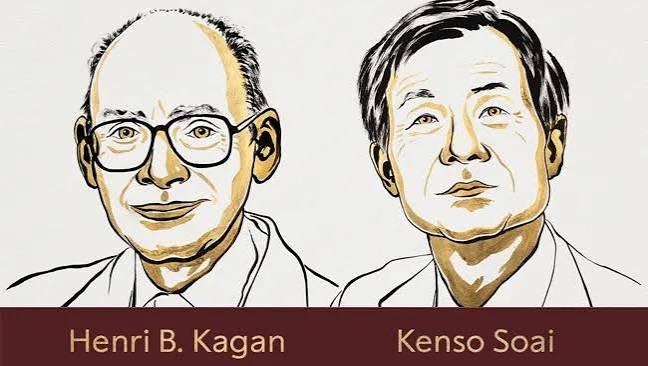
Oct 08,2026: Canadian poet and writer Anne Carson won the 2026 Nobel Prize in Literature “for her bold and inventive oeuvre that, in playful dialogue with the classical tradition, has created new forms for contemporary literature,” the award-giving body said on Thursday.
Canadian poet and essayist Carson’s work often blends verse, prose, dialogue and translation in a genre-defying mix.
She is widely known for her translations of classical Greek literature, which heavily influences her work which ranges from opera libretti to literary criticism and verse novels such as “Autobiography of Red” from 1998.
Her style is exemplified in “Norma Jeane Baker of Troy” from 2019, a performance piece which mixes the stories of Helen of Troy in Euripides’ play “Helen” and Marilyn Monroe.
Carson takes a place beside luminaries such as Alexander Solzhenitsyn, Alice Munro and Ernest Hemingway as a recipient of the award, which often divides opinion among book lovers.
Last year’s prize was won by Hungarian writer Laszlo Krasznahorkai, dubbed the “master of the apocalypse” by American critic Susan Sontag.
Established in the will of Swedish dynamite inventor and businessman Alfred Nobel, the prizes for achievements in literature, science and peace have been awarded since 1901.
The prize is awarded by the Swedish Academy and is worth 12 million Swedish crowns ($1.2 million).
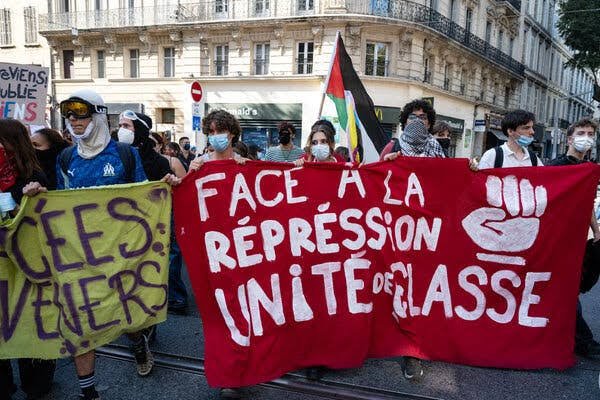
New Delhi, Oct 5,2026: The Supreme Court on Monday agreed to list a plea seeking directions to the Delhi Police to allow peaceful protests at Jantar Mantar in the national capital, amid ongoing demonstrations against Chief Election Commissioner Gyanesh Kumar.
The plea was mentioned before a bench headed by Chief Justice Surya Kant. Appearing for the petitioner, counsel submitted that the Delhi Police was not permitting peaceful protests in the city, including demonstrations by students, citizens, office-bearers of registered political parties and Members of Parliament.
The plea, filed amid protests against Chief Election Commissioner Gyanesh Kumar, seeks directions to the Delhi Police to permit peaceful demonstrations.
Chief Justice Surya Kant asked counsel to clarify the relief sought and whether the matter was a PIL. The CJI said the Court would check if similar pleas were pending and agreed to list the matter for consideration.
New Delhi, Oct 5,2026: The Election Commission of India on Monday sought to rebut what it described as a “misleading” claim over the Special Intensive Revision (SIR) of electoral rolls, asserting that the exercise was approved unanimously by the full Commission and that the Supreme Court had upheld the framework governing it.
In a “Fact Check” posted on social media platform X, the poll panel said its June 24, 2025 order directing the conduct of SIR across all States and union Territories, beginning with Bihar, was issued “with the unanimous approval of the Commission”. The ECI further said the order had subsequently been upheld by the Supreme Court in its judgment of May 27, 2026. The Commission also referred to Press Note No. 120 issued on September 26, 2026, particularly paragraph 1(iii), in support of its position on the declaration attached to Form 6 during the SIR exercise.
“The declaration attached to Form 6 for SIR has been upheld by the Hon’ble Supreme Court,” the ECI said, quoting its earlier press note. The clarification comes against the backdrop of an intensifying political and legal controversy over the conduct of SIR and the procedural requirements associated with Form 6, which is used for enrolment of new voters. Opposition parties have questioned the legal basis and manner in which certain changes or additional requirements were introduced, while the Commission has maintained that its decisions were taken collectively and in accordance with the law.
In its September 26 statement, the ECI had maintained that there was no change to the statutory Form 6 prescribed under the Registration of Electors Rules, 1960. It said the requirement introduced during SIR was an additional declaration and that the statutory forms prescribed under the 1960 Rules would continue to be used during periods when SIR was not in operation. The Supreme Court’s May 27 judgment examined legal challenges relating to the Bihar SIR and the process of electoral-roll revision.
The judgment recorded that the final electoral roll published in Bihar on September 30, 2025 contained 7.42 crore electors, compared with 7.89 crore electors on June 24, 2025, when the SIR exercise was ordered. The ECI’s latest intervention assumes significance as the controversy over Form 6 has continued despite its September clarification. The Commission has repeatedly maintained that the SIR decision was taken with the approval of all three Election Commissioners, even as Opposition leaders have questioned the validity of specific procedural changes and alleged that they were introduced without adequate statutory authority.
The issue also reached the Supreme Court on Monday, when the court declined to grant an interim order seeking the suspension of Chief Election Commissioner Gyanesh Kumar while issuing notice on a petition challenging decisions connected with the SIR exercise. The latest ECI fact check thus seeks to draw a distinction between the overarching decision to conduct SIR-which the Commission says received unanimous approval and was subsequently upheld by the Supreme Court-and the continuing dispute over the precise implementation of the additional Form 6 declaration.
The poll panel has reiterated that the SIR-related declaration has judicial backing, while the statutory forms prescribed under the 1960 Rules remain applicable outside the SIR process.
October 03, 2026: President Droupadi Murmu has given her assent to the Gujarat Uniform Civil Code (UCC) Bill, 2026, completing a key constitutional step towards its implementation. Gujarat has become the second state after Uttarakhand to secure approval for a Uniform Civil Code, which seeks to establish a common legal framework for personal matters across religious communities.
The legislation will come into force after the Gujarat government notifies the rules. Members of Scheduled Tribes (STs) are excluded from its provisions.
The Gujarat Assembly passed the Bill in March following a seven-and-a-half-hour discussion. Before the legislation was passed by voice vote, Congress legislators staged a walkout and demanded that the Speaker refer it to a Select Committee.
Chief Minister Bhupendra Patel said the legislation would promote equality and national integration. “The key aim of introducing the bill is to ensure social harmony and national unity. The Supreme Court has also suggested that UCC will ensure women’s rights are secured,” he said while introducing the Bill.
What does the Gujarat UCC provide?
The legislation establishes a common framework covering marriage, divorce, succession and inheritance, and live-in relationships, irrespective of religion.
It prescribes a minimum marriage age of 21 years for men and 18 years for women. Couples can solemnise marriages through religious ceremonies or under the Special Marriage Act, but registration is compulsory.
The Code prohibits a second marriage while an existing marriage remains valid, thereby disallowing polygamy. It also invalidates marriages between persons within prohibited degrees of relationship, unless an established custom or usage permits the union and is not contrary to public policy or morality.
The legislation further prohibits nikah halala, a practice requiring a divorced woman to marry another man and obtain a divorce before remarrying her former husband. It provides that divorced spouses can remarry without such a condition. Forcing or abetting the practice attracts legal consequences.
What are the rules for divorce and inheritance?
The Code establishes a common judicial procedure for divorce, replacing religion-specific methods of dissolving marriages, including customary out-of-court procedures and iddat-related processes.
Either spouse may seek divorce on grounds including adultery, cruelty, desertion for two continuous years, religious conversion and incurable unsoundness of mind. Wives have additional grounds where the husband is guilty of rape or an unnatural sexual offence, or has multiple wives from marriages contracted before the Code came into force.
Divorce by mutual consent is permitted if the couple has lived separately for at least one year.
For inheritance, the legislation introduces a common framework for intestate succession, applicable when a person dies without a will. The surviving spouse or spouses, surviving children, branches of predeceased children and surviving parents receive equal shares under the prescribed order of succession. Sons and daughters inherit equally, regardless of religion.
The Code does not alter testamentary succession, meaning property can still be distributed according to a valid will. If no eligible heirs survive, the estate passes to the government through Escheat.
How does the Code regulate live-in relationships?
Registration of live-in relationships is mandatory. Partners must submit a statement to the designated registrar, and couples must notify the authorities when their relationship ends.
A relationship cannot be registered if either partner is a minor, is already married, is in another live-in relationship or falls within a prohibited degree of relationship.
Failure to register a relationship after cohabiting for more than one month can attract imprisonment of up to three months, a fine of up to Rs 10,000, or both. The Bill also provides for a fine of up to Rs 10,000 for non-registration of marriages and divorces.
Children born from live-in relationships are recognised as legitimate children of the couple. Women deserted by their live-in partners can approach a competent court to seek maintenance.
What are the objections and constitutional concerns?
The Opposition criticised the legislation during its passage. Congress MLA Imran Khedawala described it as “against our society” and questioned its benefits, while alleging that the government should focus on other issues concerning Muslim women. AAP MLA Chatar Vasavane alleged that the Bill served electoral interests and raised concerns about its implications for tribal women marrying outside their communities.
Legal concerns also arise from compulsory registration and penalties for live-in relationships. A June 2026 analysis published by The Hindu noted that such provisions raise questions about individual autonomy and the State’s regulation of consensual adult relationships.
In S Khushboo v Kanniammal (2010), the Supreme Court held that morality and criminality are not synonymous and that live-in relationships and premarital sex should not be associated with criminality.
The analysis also cited Deepika Singh v Central Administrative Tribunal (2022), in which the Supreme Court recognised that non-traditional family structures deserve legal protection and social welfare benefits. Critics have been reported to argue that the UCCs do not adequately accommodate such family arrangements, including queer relationships.
Article 44 of the Constitution directs the State to endeavour to secure a Uniform Civil Code for citizens. Uttarakhand implemented its UCC in February 2024, while Gujarat’s law awaits notification of its implementation rules.
Gujarat is the second state after Uttarakhand became first in independent India to implement a Uniform Civil Code on January 27, 2025, introducing a common legal framework governing marriage, divorce, inheritance and live-in relationships, with an exemption for Scheduled Tribes.
Moscow, Oct 3,2026: Global average life expectancy has nearly recovered to pre-COVID-19 pandemic level, the World Health Organisation said on Friday.
The UN health agency estimated health trends by country and region for the period from 2000 to 2023, including the dynamics of life expectancy, mortality and morbidity, and diseases.
“Global life expectancy reached 73.3 years in 2023, close to the 73.4 years recorded in 2019,” the statement read. Non-communicable diseases accounted for 74% of deaths globally in 2023, compared with 58% in 2000. At the same time, mortality from dementia tripled over the period, while health losses associated with anxiety disorders and depression rose sharply since the start of the pandemic.
In 2023, the 10 main causes of death accounted for 33 million of the 61 million deaths recorded worldwide. Non-communicable diseases made up eight of these 10 leading causes.
According to the WHO, the main causes of mortality were cardiovascular diseases, including ischemic heart disease and stroke, as well as respiratory diseases, including chronic obstructive pulmonary disease and lower respiratory infections.